

 YouTube
 Apple Podcasts
 Spotify
 iHeartRadio
 Podcast Addict
 Podchaser
 Deezer
 PlayerFM
 Castbox
 Goodpods
 RSS Feed
 Amazon Music
 Going Public to Buy Main Street: Teamshares SPAC Merger— Michael Brown
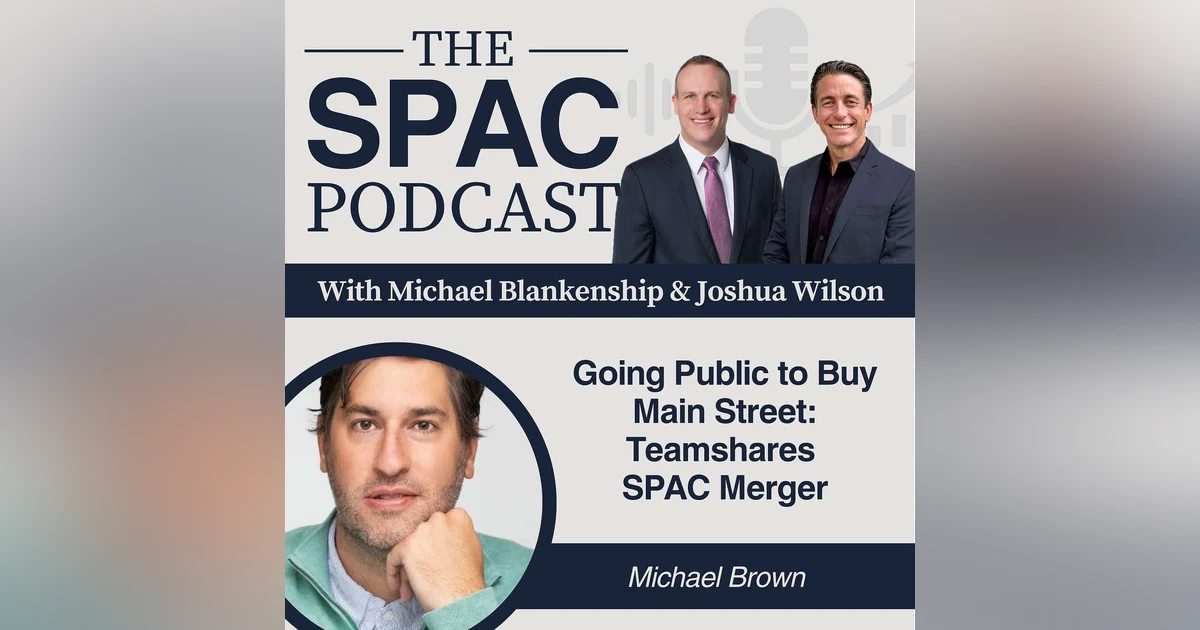
What if going public meant buying Main Street — 92 small businesses at a time?
Michael Blankenship sits down with Michael Brown, Co-Founder & CEO of Teamshares — a programmatic acquirer of $0.5M–$5M EBITDA businesses heading to NASDAQ via merger with Live Oak V. Founded in 2019, Teamshares has acquired 92 companies from retiring owners, runs $400M+ in consolidated revenue across 40+ industries and 30 states, and is part HoldCo, part fintech.
Michael walks through the silver tsunami thesis, why most SME exits end in inertia or closure, and how Teamshares structured a SPAC merger and PIPE alongside T. Rowe Price.
🤝 Connect with Michael Brown:
🌐 https://www.teamshares.com/
💼 https://www.linkedin.com/in/-masb/
📩 Connect with Michael Blankenship:
💼 https://www.linkedin.com/in/mikeblankenship/
🌐 https://www.thespacpodcast.com/
🎙️ Follow The SPAC Podcast:
🌐 https://www.thespacpodcast.com/
▶️ https://www.youtube.com/@thespacpodcast
Important Disclosures and Disclaimers
Teamshares has entered into a definitive agreement for a business combination with Live Oak Crest Acquisition Corp. (“Live Oak”), a special purpose acquisition company. In connection with the proposed transaction, a registration statement on Form S-4 (the “Registration Statement”) has been filed with the U.S. Securities and Exchange Commission (the “SEC”). This podcast does not constitute an offer to sell or the solicitation of an offer to buy any securities. For important information about the proposed transaction, including where to find the Registration Statement and other legal disclaimers, please refer to the press release available at https://www.businesswire.com/news/home/20260403515446/en/Teamshares-and-Live-Oak-V-File-S-4.
Clarifications. References to “segment profit” refer to Pro Forma Operating EBITDA, which includes pre-acquisition results of acquired businesses as if they had been owned for the full year. A full reconciliation of non-GAAP measures to the most directly comparable GAAP measures, as well as Teamshares’ audited GAAP financial statements, is available in the Registration Statement. Investors should review the full set of assumptions and risk factors accompanying these metrics in the Registration Statement.
Disclaimer: Michael J. Blankenship is a licensed attorney and partner at Winston Taylor. Joshua Wilson is a licensed Florida real estate broker and holds FINRA Series 79 and Series 63 licensure. The content of this podcast is for informational and educational purposes only and should not be considered legal, financial, or compliance advice. All views and opinions expressed by the hosts and guests are their own and do not necessarily reflect the policies or positions of any regulatory agency, law firm, organization, or employer. Listeners should consult their own legal counsel, compliance teams, or financial advisors to ensure adherence to applicable regulations, including SEC, FINRA, and other industry-specific requirements. This podcast does not constitute a solicitation or recommendation for any financial products or services.
Let's Connect on LinkedIn:
https://www.linkedin.com/in/mikeblankenship/ https://www.linkedin.com/in/joshuabrucewilson/
To Contact Us, Please Visit:
00:00 - Welcome and Guest Introduction
00:23 - What Teamshares Does: Programmatic SME Acquisition
01:00 - The Silver Tsunami: 4.5M Businesses in Transition
03:00 - Why Most Small Business Exits End in Inertia
04:30 - Why Wall Street Has Missed the SME Opportunity
07:40 - The Forecast: $19M → $60M → $100M Pro Forma Adjusted EBITDA
10:00 - How Employee Ownership Drives Retention and Growth
12:30 - Risk vs Opportunity in the Retirement Wave
13:40 - Why Retail Investors Have Misunderstood Small Business
15:50 - What Makes a Successful SME Transition
18:40 - Part HoldCo, Part Fintech: The Teamshares Model
20:30 - HoldCo vs Private Equity: Why Permanent Ownership Wins
25:00 - How Teamshares Beats the PE Model on 92+ Acquisitions
Hello, this is Mike Blankenship with the SPAC Podcast. Today I'm joined by, uh, Michael Brown. Um, Michael, why don't you tell us a little bit about yourself?
Michael Brown:Sure, yeah. I'm, so I'm co-founder and CEO of a company called Teamshares, and we are, um, you know, within the next, uh, couple of months gonna be publicly traded on the NASDAQ. What, uh, you know, via merger with Live Oak V. And so what Teamshares does is we're what's called a programmatic acquirer, um, of, of businesses, and what that means is we buy, you know,$1 to $5 million EBITDA businesses, sometimes as small as 500,000 of EBITDA strictly from retiring owners, and then we'll integrate them to our platform, which involves both financial integration and transitioning leadership. And it's something we've now done, you know, 92 times since we launched in 2020, and, uh, are excited to continue scaling the public markets.
Michael Blankenship:Great. Well, Michael, so people are calling where we're headed right now the, the silver tsunami. Um, what exactly is happening well, you know, with retiring small business owners and, you know, why should investors, you know, care about that?
Michael Brown:Yeah. So I think, uh, so if you just look at the small business economy, there are 6 million small businesses that have employees up to, up to 100. About half of them are owned by baby boomers, uh, so they're, baby boomers are, are thoroughly sort of, of retirement age. Uh, and then, and then, you know, another 25% are owned by Gen X. Um, so they're sort of either approaching retirement age or some of the older cohorts are sort of starting to retire. And so 75% of small businesses are owned by, you know, that's four and a half million businesses are owned by people of that sort of age group. And, you know, the, from the best reporting you see, only about 10,000 of the sort of probably 100,000 that are up for sale every year actually result in a sale. And in our minds, it's, it's, it's kind of a supply demand equation is that, you know, small businesses never used to be for sale. They used to transition within a family. Uh, the kids started going to college, and they didn't come back, and so there's just not enough willing and qualified buyers for these small businesses. So I think, you know, like, silver tsunami's not a phrase we tend to use, but I think pragmatically what it's, what it means is that a lot of small business owners are working much later than they planned. Um, and then amongst, you know, extreme situations, there's, there's cases where owners are just kind of working into their 70s or 80s and just even shutting down the business. So it's, there's a, there's a giant transition that needs to occur, and there's a lot of friction in the process of transitioning ownership because family ownership more or less went away. It's, uh, whereas as it used to be the default, uh, a couple generations ago.
Michael Blankenship:Yeah, and for, for most small business owners, their biggest asset is that business. And so- That's right ... w-why do so many exits end in closure instead of just sort of a successful
Michael Brown:sale? Yeah. I think today they end in inertia, right? I think that they end... So we've never been alarmist about this. I think there's some people that, you know, they take it too far. I, I think that what, if you think about it from an incentive standpoint, um, you know, a, a, a business owner typically likes what they do, right? There's fulfillment and, you know, every year they own it, they get another year of profit from the business. And, and because small businesses, you know, on average are pretty risky, right? They will sell for three, four, five, maybe six times a year as profits, right? And so an owner's natural incentive is to say, "Okay, if that's the market sort of price for a business," right? Then an owner's often natural incentive is to sort of wait three or four or five more years, right? And then they might even grow it during that timeframe. So, so I think because it's not easy to sell your business, and you only get to do it once, uh, and there's just not a lot of buyers, um, I, I, I think that people will, you know, with, with higher quality businesses will often hold on a little longer. And then I think what we see, particularly amongst the smaller businesses, is that there just may not be a buyer for the business because most of the buyers in this size category are individuals buying a business for the first time. And, you know, it's a big bet. You're kind of betting your life on one, uh, you know, so one company. And so I think there's just a lot of friction, um, in getting a transaction done, so.
Michael Blankenship:Yeah. And then in, in your view, like what, why has this massive ownership transition talk about, you know, gone mostly unnoticed by Wall Street?
Michael Brown:Yeah. It's... So, uh, it's a great question because in the... You know, it, it's, it's a topic of conversation, um, that is in other economies where SMEs are sort of a bigger proportion of the economy. So a good example is Japan, but I, I think it's true even a lot of sort of like Commonwealth countries, right? It's just more talked about. So Japan named it the number one economic issue in twenty twenty-five. That small business succession was their number one economic sort of theme for the year to focus on. I think that, you know, the size of company has gone up over time, right? When I started as an analyst at Morgan Stanley, a large cap company was a twenty to fifty billion dollar market cap company, right? And today that's-
Michael Blankenship:Trillions.
Michael Brown:Multi-multi-trillion dollar market cap companies didn't exist. And then I think that's the public markets, and then I think in the private markets, of course, sizes of funds, everything from private equity to venture, they've all gone up too. So I think that the natural incentives of the public and the private markets, um, you know, ha-have, have just trended up. And then I think again, you know, what Teamshares does- Uh, i-it's not easy, right? It took, like, significant, you know, know-how of, you know, a decade plus of sort of doing this by hand and then building software and, and being able to really have an edge at doing this. So I don't think that people have, uh, been able to put together what Teamshares has in terms of having a tech-enabled factory. Um, so, so we're really the first, you know, sort of in the non-tech space. There's a, there's a well-known company, Constellation Software, uh, which sort of acquired companies of a similar size in the software space. But, you know, we're sort of the first sort of, you know, fully diversified non-tech company to do this. And so, you know, maybe there's a chance that investors will take that.
Michael Blankenship:Yeah. I mean, going back to the, you know, the fact that these businesses are owned by boomers and, and Gen X, um, does that certainly change the timeline or urgency of, of the, not of the way you-
Michael Brown:Yeah. It, it is. I mean, I mean, in our view, it's a... There's sort of a, you know, on the, on the baby boomers, you know, you're well into the cycle. Um, but I, I still think there's probably another ten years of baby boomers transitioning and you've, you've probably got, you know, maybe up to twenty years of sort of Gen X, fifteen, twenty years, right? Depending. But we're, we've already, we've already acquired a few businesses from, from, you know, the older cohorts of, of Gen X ownership. So it's, it's kinda happening, happening in real time. But I think the, you know, what I, what I always like to say is that, like, you know, the market is just so large, right? That, you know, Teamshares today is ninety-two companies, right? You know, we, we put out there that we aspire to have thousands of companies, right, as subsidiaries of Teamshares, right? And that's against a market that we think of, you know, is several million companies within, uh, within our target universe. So it's a, it's a really, really large market and a really large shift for the small business economy that we're a part of, so.
Michael Blankenship:Yeah. Well, why don't you talk us through some of the sort of Teamshares investment opportunity, uh, that you see down the road, like the growth that you can talk about?
Michael Brown:Yeah. Yeah. So I think we, we've put out a, um, you know, a plan, a, a forecast to grow our, you know, so our key metric is, is pro forma adjusted EBITDA. So that's basically all of the consolidated EBIT of all the companies minus our parent G&A. So that number was nineteen million dollars in twenty twenty-five. And that was an important year for us because we, you know, we ran a venture-backed strategy, you know, where the acquisition of each company individual, uh, was profitable, but we plan on scaling towards thousands of companies- And so we invested in building, you know, technology and an assembly line at the parent to be able to, to, to achieve that in a very repeatable fashion. So the first step was that we needed to overcome, you know, our parent GNA, which was planned for, and we did that. We've now tripled the, uh, the sort of segment profit over the last three years while, you know, maintaining a consistent GNA. So that was kind of step one. And then we put out a forecast. You know, one of, one of the great, uh, tools of the SPAC mechanism is, one, you can spend lots of time with, um, you know, really strong investors and then publish the materials that you did. So we spent that time with, you know, T. Rowe Price and then published all our PIPE materials. And then, uh, and that was sort of the forecast. And then, uh, a-a-and, and, and so that forecast, right, is going to sixty million of, uh, of, of pro forma adjusted EBITDA in twenty twenty-six, and then a hundred million in twenty twenty-seven. And for us, that's just the-- You know, we're-- First of all, we're standing behind that by locking up all our, you know, equity, um, as a management team, and then we're also investing alongside T. Rowe Price, uh, in the PIPE. But the way we think about, um, the company is everything's meant to be sustainable and repeatable. So, you know, our plan would be to, you know, if we look out beyond twenty twenty-seven, we'd be able to, you know, work towards trying to make twenty twenty-seven and twenty twenty-six repeatable type of growth, so.
Michael Blankenship:Yeah. And then I guess go more questions sort of around the businesses. So, you know, how does employee ownership actually help keep a business running when a founder retires?
Michael Brown:Yeah. So primarily, uh, small and mid-sized enterprises are really, um, at least the ones that we take on, are really asset-light, capital-efficient people businesses. Some of them have a strong brand, some of them have, you know, l-like less of a strong brand. But either way, they're really durable businesses that have been around for thirty-five years and they have, uh, you know, like real goodwill in the economy. These are people businesses, and so actually making sure that you retain the employees of those businesses is key. And there's a lot of fear when a company is acquired, right? It doesn't matter whether it's a private equity firm, you know, if a larger, you know, a larger public company or a search fund or an individual buyer in town. If someone's buying the business, you know, there's, there's gonna be fear about, okay, the former owner, you know, Michael owns this business, and you, you know, you, you're, you're beloved by the team and you're, you're stepping away. What's gonna happen? What's happening to your pay benefits? All that stuff, right? So in the first instance, actually retention is really key, and we've been able to retain over ninety percent of the key employees, um, you know, whom we meet prior to the transaction occurring. Um, and then the next thing is actually a process of people getting aligned in the financial performance and the growth of the business, um, and, you know, being able to see the financials through our software. So it's not just a case of, um, sort of, you know, giving people stock in the operating company, it's, it's people earn it through, uh, through retention, through staying, and then people get to see the financials in the business and participate in growth. And we believe that when you give people a stake in the outcome, that's when great things happen. I think that small business is kind of the last arena for this to occur. It started off in Silicon Valley, and then it made its way to public companies, it made its way to sort of private equity, and, you know, small businesses are one of the last arenas to have, you know, employee stock be part of the equation. It's just that it's historically a very cumbersome and expensive process, but by us, you know, designing a Plan Once building into software, we created a sort of near zero marginal cost to implement and maintain all this.
Joshua Wilson:Mm.
Michael Blankenship:Yeah, and, you know, from your point of view of this retirement wave, uh, you know, is it more of a risk to the economy or an opportunity in your v- your mind?
Michael Brown:I think with any risk, I think it's always risk and opportunity. I think it's both. Like, I think the premise of any black or white question is, is usually gray, right? It's both. So I think the, the risk is, um... I think the risk is for just putting sort of like, you know, citizen, you know, sort of like economics major, uh, hat on, I, I think the risk is one of dislocation, right? And jobs lost. That's, that's the, that's the risk, right? So if when a company... Because there are companies that close, and the new business formation rate, I forget the stats, but it's down meaningfully over the last sort of, you know, three or four decades. So the risk is one of dislocation of jobs, dislocation of, okay, a company shuts down, and then, you know, look, there's probably an enterprising em- employee that says, hey, they're gonna start up, you know, a small one or two-person firm. In some industries that works. In more sort of, you know, manufacturing, that may not work, right? So there's-- So I think the risk is really in dislocation. I think the opportunity sort of operationally, right, is actually the companies that continue to thrive and are stable and stay in business, uh, you know, they may end up growing their market share over twenty, thirty years, um, where sort of others, w- they're, they're sort of the survivors and the, and the winners. And then I think between now and then there's a, there's a just a great opportunity for, um, you know, for, for new owners of businesses to continue and build upon the legacy of, you know, just great businesses that were owned and formed and run by a family, so.
Michael Blankenship:Yeah. And then looking ahead ten years, um, you know, why do you think retail investors, uh, you know, still misunderstand the most about small businesses and, and this transition where we're
Michael Brown:seeing- It's, it's inter- I bet you most retail investors, you know, know more about, you know, a small business than they think because it's in their community, they're customers of them, you know, they're maybe they're friends, maybe they're family owned. But I, I don't think there have been particularly great ways to invest in sort of at least diversified SMEs, right? And, and in Teamshares, one is investing in a, you know, in a programmatic acquirer, in a, in a, in a public company that's similar to the many dozens of programmatic acquirers that have come before us, right? Just that, uh, there hasn't been one focused before on diversified SMEs in the sort of half a million to five million space. Um, so, so I think that it just hasn't been available, um, as a, um, you know, a, a, as a, as a corporation, as a public stock that one could invest in. Um, and then I think just part of, part of your question is also just like the national discourse and, you know, there's always a lot going on in the US economy between geopolitical events and, you know, new technologies and, and, and again, going back to large caps. I, I think that people have grav- you know, gravitated towards large caps. Um, so it, it's our job to, to go out there, grow our earnings, uh, and build our market cap and, and continue to attract investors, both institutional and individual.
Michael Blankenship:Yeah, I completely agree. Small businesses are what run this country and our economy. Um- Yeah ... you know, you've done it, you mentioned it more than 90 times, and so in your view, and, and maybe it's, you know, objective and subjective, what, what makes for a successful transition? Um-
Michael Brown:Yeah. I, I think, um, the company itself needs to be really durable. I think anyone can go and get three or five years of financials and have a look at numbers and say, "Okay, what, you know, uh, what, what are the financials of the company?" Right? Uh, I, I think there is some like, you know, some real know-how, and we built a real tech-enabled system to, to recast the numbers and know what they're gonna look like in the future. But I, I, I think that being able to actually move beyond the numbers and really assess if a company is going to hold up to the risk of that founder transitioning out, right? So, so I think that that is, that is a place where I bet you most people fall down in some of our early, much smaller acquisitions. You know, we, we had a few mistakes too, right? So I, I think that that's kind of point one. Point two is making sure that you have, you know, owners who are, uh, aligned in helping the, the business succeed. They're not gonna be re-competing with you in the future. They're not starting an adjacent business. They're not, you know, um, having the employees leave to come work with them in a new venture, right? So real stability, support of the former owners- Building strong relationships. Um, and then I think then, um, you know, in our case, because we're doing this at, at relatively high volume, being able to have reliable financials, right? And again, we're able to see operating KPIs, three-statement financials, trailing twelve-month numbers, management discussion analysis for ninety-two companies. And, and what we've done that I think that's very different than any b- any sort of more traditional buyer, could be an individual or could be a PE fund, we built software to scale all of this, and then we've also built an institutionalized leadership system where we're able to-- we get over fifty applicants per opening, um, for a president. A president is sort of a unit manager, someone who runs one company that we acquire. And if you do well at that, you can run multiple companies. Um, and you know, we have an eighty percent success rate with hiring and placing presidents. You know, uh, it, it is hard to, to hire and train leaders, and we do a pretty good job with it, but sometimes one out of five within the year or two mark, we determine or they determine it's not the right fit. And so what is great about our system is that you've now got this very resilient, institutionalized leadership system where if someone leaves, right, there's now a group president who's overseeing that company, and there's real resiliency. So that is-- that's a quite a different setup, um, than a typical transaction. Mo-most of the buyers, Michael, in the, in the SME space are individual buyers. Um, it's over eighty percent per the, you know, Pepperdine study.
Michael Blankenship:Yeah. And, and you-- Theme shares describes itself as a fintech, part fintech. Uh, what does that mean?
Michael Brown:Yeah. So we say part, part HoldCo, part fintech, because the HoldCo is, is very clearly the financial model of the business, right? So people think a Berkshire, a Constellation, right? Any company that buys and con-- buys one hundred percent of the shares and consolidates, right? In our mind, that's a, a holding company, right? And then there's different flavors of that, right? So to compare and contrast Berkshire versus Constellation, Berkshire, let, let's leave the securities trading aside. Uh, you know, th-their strategy was to continue to do bigger and bigger and bigger acquisitions occasionally, right? Constellation Software strategy was to continue to do small acquisitions in the non-tech space or, sorry, in the tech space, rather, sort of enterprise software and other sort of software. And then there's a whole host, dozens that have done it in specific industries like insurance, um, in, you know, industrials, uh, in waste management, right? All kinds of, you know, we've got a page in our investor deck that shows sort of close to thirty different logos of quite successful public companies. Um, so, so I, I think the, um, the, the key piece is to continue to, um, you know, do those acquisitions well and that they, uh, you know, that you understand their numbers, right? And so for us, going back to the question of sort of part, part HoldCo, part fintech, right? The HoldCo is the consolidating model. The fintech is the software that we've built to both acquire the businesses Efficiently and at very low marginal cost while doing rigorous diligence, and then to be able to, um, to also to be able to see the numbers. And then we've, we've quietly we've started building, you know, financial products for the companies themselves too. Um, it's something that, you know, we're, you know, subtle about, but that's, uh, something that I think is on our roadmap and, and, you know, exciting too.
Michael Blankenship:Yeah. And, you know, as w- why the holding company model versus just going out and being private equity? I'm, I- Yes ... I assume there's some returns there that you're looking at.
Michael Brown:Yeah, totally. I, I personally, I don't think private equity is good investing at all. If you look at the, to just give a data-driven answer to that, the, the median return of a MOIC or a multiple invested capital in a 10-year fund is not great. It's like you put in a dollar, and 10 or 12 years later you get back $2. Now, there are outliers. It's a game of outliers. Venture is even more extreme. If you're in Sequoia or Benchmark or something like that, it's, you know, it's a totally different beast. But the median fund, and even if you go up to the 75th percentile, the returns are not particularly good, in part because people are paying very high multiples for the businesses and banking on, quite aggressive in our opinion, synergies and growth assumptions, and then you have to bank on a sale of the business, right? And then there's nothing immoral about a GP/LP structure, but it, it takes a lot of the investor returns and redirects them towards compensation. And so the returns, that's, that's just one side of it. The other bit, it's just never made sense to me why you would, uh, sort of buy something and try and sell it two or three years later, right? Like, if you buy a business for five times and you sell it two years later for seven times, I think a, you know, a lot of people would tell you, "Oh, that's amazing. You killed it." And I'm like, well, what if wh- what, what, what if you could own it for 200 years, right? Like, that's just, it's very, very, very different. And so, so I think that those, uh, those structures, again, it, it serves a really important function in the economy, right? Like, there is a reason why private equity exists. There is a, it's a way obviously for very large institutions to deploy really large amounts of capital, right, into private companies, right? And I, I do think that, you know, there are a lot of companies that might be better off being private, right? There's no real need for them to be public. Teamshares, on the other hand, directly benefits from being public, um, you know, through access to capital, ability to use a currency, all those things. Um, but, but I think for a lot of companies, there's not necessarily an, a business model advantage to being, uh, to being public.
Michael Blankenship:Yeah. Totally understand. Um, well, Michael, I appreciate your time, um- Of course ... and, uh, l- learning more about Teamshares. Best of luck with your, uh, de-SPAC transaction there, um- Yeah, this is Mike with the S
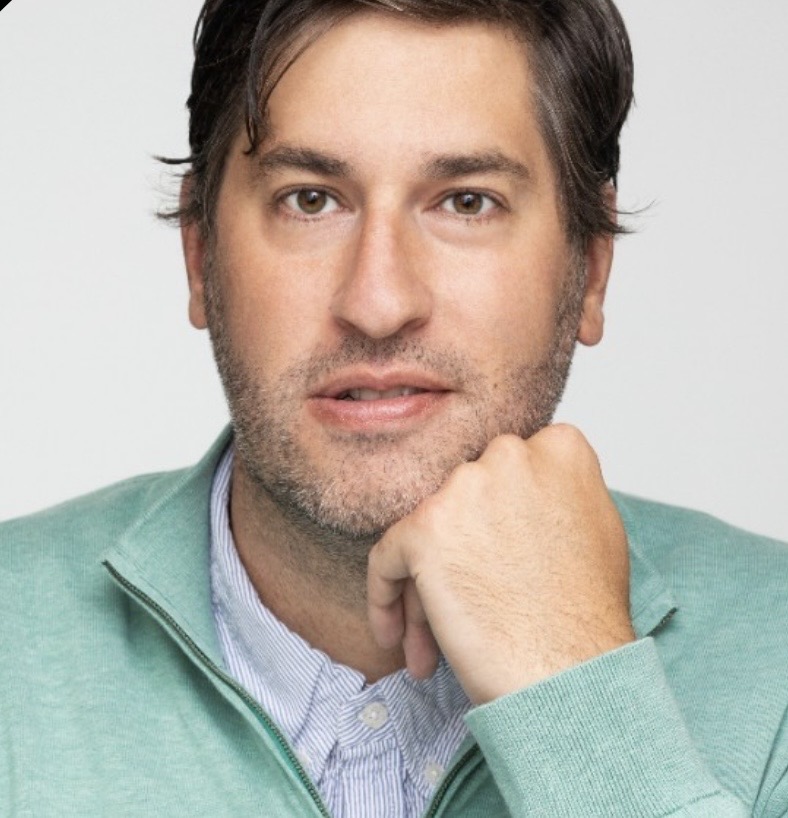
CEO & co-founder
Michael is co-founder and CEO of Teamshares, a tech-enabled acquiror of high-quality businesses, intending to be a permanent home for businesses. Part holdco, part fintech, Teamshares programmatically acquires companies with $0.5 to $5 million of EBITDA from retiring owners, integrates them with the Teamshares platform, and helps employees earn company stock. Founded in 2019, Teamshares operates subsidiaries with consolidated revenue of over $400 million across over 40 industries and 30 states.