

 YouTube
 Apple Podcasts
 Spotify
 iHeartRadio
 Podcast Addict
 Podchaser
 Deezer
 PlayerFM
 Castbox
 Goodpods
 RSS Feed
 Amazon Music
 After 130 SPACs and 140 DESPACs Here's What I've Learned with Brandon Sun
Cohen & Company's Brandon Sun, banker on 130+ SPAC IPOs and 140 de-SPACs, shares what 13 years at the center of the blank check market has taught him about cycles and deal flow.
Key Takeaways
- SPACs offer certainty when the IPO window closes; about 1,000 filed S-1s are stuck.
- Every major quantum computing company went public via SPAC.
- Public-private arbitrage drives rare earths, SMR nuclear, and deep tech toward SPACs.
- Cross-border listings are flowing to SPACs.
- Brandon Sun has worked through the 2021 boom, the 2022–2023 collapse, and the 2025 resurgence.
After 130 SPAC IPOs and 140 de-SPACs — the most of any banker he knows of — Brandon Sun shares what 13 years at the center of the blank check market actually teaches you.
In this episode, Michael Blankenship sits down with Brandon Sun, Head of SPAC Investment Banking at Cohen & Company Capital Markets. With 130+ SPAC IPOs raising $45B+ in equity capital and 140 de-SPAC transactions representing $210B+ in combined enterprise value, Brandon is one of the longest-serving and most prolific SPAC bankers on Wall Street. A decade at Deutsche Bank followed by three and a half years at Cohen & Company — through the 2021 boom, the 2022–2023 collapse, and the 2025 resurgence — gives him a vantage point few practitioners have. Essential listening for SPAC sponsors, PIPE investors, de-SPAC target founders, and capital markets professionals.
🎯 What We Cover:
- Why the SPAC offers certainty when the IPO window closes — and why 1,000 filed S-1s are currently stuck
- The real advantage of SPACs vs. traditional IPOs and direct listings today
- Why every major quantum computing company went public via SPAC — IonQ, Rigetti, D-Wave, Xanadu, Terra Quantum
- The public-private arbitrage driving rare earths, SMR nuclear, and deep tech to SPAC transactions
- Why cross-border listings are flowing to US exchanges as foreign markets lose liquidity
- What separates target management teams that close from the ones that walk away
- The #1 opportunity cost SPAC sponsors underestimate when evaluating targets
- How to think about valuation, structure, and story as one integrated pitch
What the rest of 2025 looks like for SPAC deal flow across sectors
🤝 Connect with Brandon Sun:
🌐 https://www.cohencm.com/brandon-sun
💼 https://www.linkedin.com/in/brandonsun/
📩 Connect with Michael Blankenship:
💼 https://www.linkedin.com/in/mikeblankenship/
🌐 https://www.thespacpodcast.com/
📩 Connect with Joshua Wilson:
💼 https://www.linkedin.com/in/joshuabrucewilson/
🌐 https://www.thespacpodcast.com/
🎙️ Follow The SPAC Podcast:
🌐 https://www.thespacpodcast.com/
▶️ https://www.youtube.com/@thespacpodcast
Disclaimer: Michael J. Blankenship is a licensed attorney and partner at Winston Taylor. Joshua Wilson is a licensed Florida real estate broker and holds FINRA Series 79 and Series 63 licensure. The content of this podcast is for informational and educational purposes only and should not be considered legal, financial, or compliance advice. All views and opinions expressed by the hosts and guests are their own and do not necessarily reflect the policies or positions of any regulatory agency, law firm, organization, or employer. Listeners should consult their own legal counsel, compliance teams, or financial advisors to ensure adherence to applicable regulations, including SEC, FINRA, and other industry-specific requirements. This podcast does not constitute a solicitation or recommendation for any financial products or services.
Let's Connect on LinkedIn:
https://www.linkedin.com/in/mikeblankenship/ https://www.linkedin.com/in/joshuabrucewilson/
To Contact Us, Please Visit:
https://www.TheSPACPodcast.com/contact/
Frequently Asked Questions
What has Brandon Sun learned from 130 SPACs and 140 de-SPACs?
Brandon Sun of Cohen & Company Capital Markets says SPACs offer certainty when the IPO window closes, at a time when about 1,000 filed S-1s are stuck, and that public-private arbitrage is drawing rare earths, SMR nuclear, and deep tech to SPAC transactions.
Why did quantum computing companies go public via SPAC?
Sun notes that every major quantum computing company went public via SPAC, including IonQ, Rigetti, D-Wave, Xanadu, and Terra Quantum.
Who is Brandon Sun?
Brandon Sun is Head of SPAC Investment Banking at Cohen & Company Capital Markets, with 130+ SPAC IPOs raising $45B+ and 140 de-SPACs representing $210B+ in combined enterprise value, after a decade at Deutsche Bank.
00:00 - Meet Brandon Sun: 130 SPAC IPOs and 140 De-SPACs
00:57 - Why SPACs Offer Certainty When the IPO Window Closes
02:29 - The State of the 2025 SPAC Market
03:06 - Sectors Driving Deal Flow: Quantum, Rare Earths, SMR Nuclear
04:00 - Why Every Quantum Company Goes Public Through a SPAC
05:30 - Cross-Border Dynamics and the Pull Toward US Exchanges
06:58 - Advising Target Companies: What to Be Ready For
08:53 - The Sponsor Side: Time as the #1 Opportunity Cost
10:07 - Valuation, Structure, and the Compelling Story
10:19 - What the Rest of 2025 Looks Like for SPAC Deal Flow
11:20 - Final Word for Sponsors and Targets
Michael Blankenship:
This is Mike with the SPAC podcast. Today I'm joined by my friend Brandon Sun. Brandon, um, why don't you give us a little bit about yourself.
Brandon Sun:
Mike, thank you so much for the opportunity. I'm thrilled to be here. Um, I am a SPAC practitioner, been doing SPACs for about 13 years, uh, three and a half years here at Cohen Company, and prior to this, a decade at Deutsche Bank. Um, in my career I've done about 130 SPAC IPOs for Premier Blue chip sponsors, uh, globally. But more importantly, I think, uh, where I really differentiate is I've done 140 DESPACS, uh, which is the most of any banker on Earth Done deals in pretty much every sector, every geography. Um, and I do need to preface that everything I say here is just my. Own personal opinions and does not constitute investment advice.
Michael Blankenship:
Absolutely. Well, that, that is one very impressive, uh, history you have with SPACs and certainly the right person to have on. So, you know, I think, um, you know, as, as we'll be discussing, um, SPACs today, you know, it's gone through a full evolution cycle as we know over the last few years we've seen this from before. The SEC rules adopt proposed, adopted, and now we're in something else. Where do you see the net? Where do you see the real advantage today compared to traditional IPOs or, or direct listings?
Brandon Sun:
Uh, at the end of the day, I think with SPACs offer, right, is it offers certainty if a company wants to go public, right? Uh, the SPAC give 'em the surest way of ascertaining a NASDAQ or NYSE listing, right? Or target. It can control speed, um, and it can control certain things such as the way the valuation and deal structured. The problem with the IPO market is even though it's the most conventional path to going public, right, uh, unfortunately your fate is sometimes, uh, in the hands of few investment banks, right? And you catch a bad market window, you're simply not able to go public. If you look at this window now, it's actually really interesting, right? There's a thousand companies win to go public, right? Publicly file S ones or confidentially file S ones, right? They're all effectively stuck, right? The IPO market right now is a little bit of a disarray, right? So if a company really needs to go public, take control of their own destiny, right? The SPAC is the best way to do it and the quickest way to do it.
Michael Blankenship:
And so you, you mentioned it's an interesting time right now and, and I'd love to get your take on this. So what micro macro, you know, from a macroeconomic, uh, viewpoint, trends in a regulatory investor, appetite, retail participation? We hear a lot about, you know, our shaping the SPAC market today.
Brandon Sun:
I think the market, it's at an interesting time, right? There's about 200 SPACs out there, 200 publicly traded vehicles actively looking for targets, right? So a lot of potential vehicles and partners, right? Um, I think on other side too, like some of these companies are going public, right? In catching immense. Uh, interest in the public markets post-close right Demand, not just from institutional investors, right, but from strategics and retail investors, right? Sometimes even government entities, right? So I do think it's a really interesting time. There's a couple sectors, right in particular's getting disrupted, uh, such as the rare earth critical material space, such as the quantum computing space, right? Such as the SMR nuclear space. So I think in some of those sectors, you're benefiting from this massive public private arbitrage, right? You go to public multiples, right, are so much higher than that at private markets and there's so much more demand, right? By being public than saying private. So in some of those instances, right, companies almost have to export, be public, 'cause it is the lowest cost of capital and it's the most access to capital.
Michael Blankenship:
So you mentioned the hottest sectors and you, you mentioned, um, you know, quantum computing. What, what do you think makes that sector so hot right now, particularly if, you know, looking at SPACs, I mean, you know, we know each other working on quantum deals, but in your view, Brandon, like how do you see that kind of going forward, especially with AI and everything else on the quantum and, and digital assets, everything.
Brandon Sun:
No, it's a, it's a unique moment in time, I think for the quantum computing space. Right? People realize like it's a disruptive technology that could change the world one day. It could be five years, could be 10 years, could be 20 years, right? But it's a matter of when and not if. And I think what's really, really interesting is all these companies have gone public, uh, and every single one has gone public through apac. And they've done pretty well. If you look at the three peers, right? IonQ, Rigetti, D-Wave, they all trade meaningfully above 10, right? IonQ trades at north of 10 billion. Our market cap Rigetti and D-Wave trade north of 5 billion, right? We're working on a couple deals together, right? Xanadu, right? Which is an incredible outcome, right? They raised 275 er, common equity pipe by 10 bucks, uh, supported by the Canadian government, right? And obviously Terra, which announced. Two days ago. I think showing the world that the door's open, there's investor demand for these stories, right? I think that's pretty empowering. I think every single quantum computing company, CEO management team is looking at this as a potential option.
Michael Blankenship:
Yeah. And, and those deals, a few of'em you mentioned have cross border, uh, aspects to them. So how do you see, you know, cross border dynamics evolving in the SPAC space? I mean, are SPACs. You know, still a compelling route for those international companies coming into the United States listing here?
Brandon Sun:
Yeah, no, it's a really good question. Um, I think if you look at kind of, uh, the capital markets globally, right? Liquidity and volumes are drying up in a lot of foreign exchanges, right? Uh, the A SX in Australia, the TSX of Canada, and I'm from Canada by the way. Um, a lot of these European changes, some of the Asian exchanges right outside are really India, the Middle East, right? Every single exchange out there is struggling, so more than ever, right? Companies globally are trying to list. In the US we're trying to list on know Nasdaq, we an NYSE, right? This is the deepest pool of capital. This is where multiples are highest, right? This is where there's most of the demand, and this is oftentimes where constrain. So I think because of that, um, SPACs have become so powerful if you have a company that really wants to ascertain confidence in going public, right? The SPAC gives 'em that kind of certainty because. The problem is for US investment banks, right? Anything with a little bit of hair, right? They toss out, right? They delay. So if a company wants to go public today, uh, and it's foreign, um, the SPAC offers that kind of, uh, path.
Michael Blankenship:
And if you're advising or at least talking to, to tar, if you're helping on the, the sell side, the target side, what are some of the things that you'd tell them to kind of be ready for the SPAC deal? Like how, like would there be something you would tell 'em, like, these are the top three things you need to worry about? Not holding you to three, but just
Brandon Sun:
Yeah. I mean really the thing I look towards right is a deep and laser focus from the the target management where CEO or founder on wanting to be public, right? That's by far the most important thing, just because. The process of going public, whether it's a SPAC or an IPO or reverse merger or direct list, right? It's long and arduous and there's obstacles that come up, right? The companies that wanna go public, because raising capital is number one focus because they're running outta money, right? Those inevitably sometimes run into trouble. Because if you want the capital market environment right, where it's less than ideal, they sometimes make ex make excuses and walk away, right? Whereas the ones right, whose number one priority is to go public, they'll get it done and no matter good times or bad, right? They're gonna find the right motivation to close these deals. Even if it's suboptimal. That's what I really look for in a, in a, in a company. Um, other things to really watch out for right, is really embracing right, the role of being public, right after going public, making sure you're generating, uh, eyeballs from, uh, investors, right? Make sure you're capturing imagination and getting out in front of media. Three is honestly, look, just a lot of hard work, right? Pounding a payment, having a lot of investor meetings is possible, right? For average dpac, we're doing, we're setting up dozens on dozens of meetings for management teams, right? Even if they don't invest today throughout the DPAC process, they could be a buyer post close, right? They could follow the story for months and quarters to come and support the company in the future.
Michael Blankenship:
And let's talk about the flip side of that. So the, the, the, the buy side, the sponsors, what do you tell them when they're looking at targets as sort of, this is, is it sort of similar but on the other side, like these, you need a management team that's hyper-focused on this and that could achieve its goals. What, what are the kind of top things you're telling the fact sponsor?
Brandon Sun:
And, and kind of the flip side, it's really the same actionability, right? Time is my biggest opportunity. Cost as a banker, right? Time is the biggest opportunity cost for a lot of these SPAC sponsors, right?'cause there's only so many hours in the day and they only have typically two years, right? Focusing on a target who wants to be public is by far the most important thing. Right? And making sure those dynamics are there. Sometimes it's a di disparate shareholder base who really need liquidity sometime because maybe the sector is getting disruptive and the concert level public, right? Look, sometimes it's simply. Twinkle eyes of the founder, right? Making sure the company actually wants to go public. Um, that is vital because if there's no actionability, right, a lot, lot, it could be a lot of wasted time and effort. Um, obviously look, a couple other things, obviously you need to check out, right? You need to make sure the deal's correctly valued, right? Correctly structured, uh, to succeed, right? We wanna make sure the story is compelling enough to resonate so we can go raise the capital.
Michael Blankenship:
Okay. I couldn't agree more. That story, like the ultimate and pegging that right valuation and getting it right is, uh, very critical. So where do you see the rest of the year as far as, you know, you mentioned 200 searching and hopefully a lot more. We hear for sign up and you know, d SPACs close as well. What do you see for the rest of the year?
Brandon Sun:
Um, I think it's gonna be a pretty exciting year, honestly. So just this week we've actually announced Two DESPACS, right? We worked together on Terra Quantum, right? We worked together, uh, sorry. And there's another deal. We're advising, uh, USL rental. It's a big lithium play, right? So we're sell side advisors to both. It's really exciting. Next week we're actually gonna be announcing two other deals, right? One's a really interesting space and Sally deal. Another one's a defense type play. Um, in the weeks to come, there's a couple announcements we have as well. Right. So I think in some ways, right, I think it's gonna be a really, really, really active take. Right. Um, so I think it bodes really well for SPACs.
Michael Blankenship:
That's great. I'm excited for, uh, good year. We certainly need it, the capital markets and seen some recent volatility, but that's good. Well, I, I don't know if there's any kind of final word you want to give to maybe the SPAC sponsors or, or targets, but, um, it's been certainly great speaking with the brand.
Brandon Sun:
No, thank you. Uh, I really appreciate time, Michael. Um, again, I think I just need to stress that this is for information purposes. It only represents my, only my, my opinions. Um. But I do think SPACs are a powerful capital solution to this market. Right. Um, I do think it's a really interesting time or it's gonna create a lot of deal flow and opportunities for companies that wanna be public. So, um, yeah, if anyone has any questions, I'm always happy to be a resource, happy to explore.
Michael Blankenship:
Great. Well, I can attest to that, that you're are quite the, uh. Expert and, uh, uh, quite a great gentleman to, uh, to help out. So, um, thanks again, Brandon. This is Mike with the SPAC podcast.
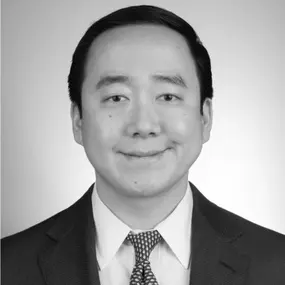
Managing Director, Head of SPAC Investment Banking
Brandon is one of the longest-serving SPAC bankers on Wall Street and is the Head of SPAC Investment Banking at Cohen & Company. Over the course of his 13 year investment banking career, Brandon has completed more than 120 initial public offerings (with most being left-led offerings) raising over $45bn in equity capital. More importantly, he has announced / closed over 130 de-SPACs and M&A offerings (mostly as lead or sole financial advisor), representing more than $210bn in combined enterprise value. Brandon has also led more than 60 PIPEs and follow-on equity offerings, raising more than $20 billion in equity capital.
Brandon is deeply involved from SPAC formation to deal completion, and prides himself in being a trusted advisor post-close through follow-on equity offerings, M&A transactions and warrant exercises / restructurings. In addition to covering premier SPAC sponsors, Brandon focuses on advising quality private company management teams / boards. As a result, he has served as sellside financial advisor in several dozen transactions. Having completed deals across six continents and every major industry, Brandon also has deep expertise in certain industries such as critical materials / rare earths, quantum computing and cross-border public M&A.
Prior to joining CCM, Brandon helped lead / grow Deutsche Bank’s SPAC investment banking platform and was a Financial Institutions Group (FIG) banker for a decade. Beyond SPACs, Brandon brings domain expertise in permanent capital vehicles (including REITs, BDCs, closed-end funds, European… Read More