

 YouTube
 Apple Podcasts
 Spotify
 iHeartRadio
 Podcast Addict
 Podchaser
 Deezer
 PlayerFM
 Castbox
 Goodpods
 RSS Feed
 Amazon Music
 Taking Fusion Energy Public: General Fusion's SPAC Deal — Greg Twinney
General Fusion CEO Greg Twinney on taking fusion energy public through a SPAC merger with Spring Valley, and why committed PIPE capital mattered more than the trust account.
Key Takeaways
- General Fusion chose a SPAC over a direct listing or IPO.
- Its Spring Valley business combination carries roughly $1B pro forma equity value.
- An oversubscribed PIPE of about $108M anchored the deal.
- Committed PIPE capital mattered more than relying on the trust account given redemption risk.
- The capital funds milestones for a 50% power-plant-scale machine.
What does it take to put fusion energy on the public markets? Greg Twinney, CEO of General Fusion, joins Mike Blankenship to break down why the company is going public through a SPAC merger with Spring Valley — and why committed, oversubscribed PIPE capital mattered far more to him than counting on the trust account to actually come through at closing.
EPISODE SUMMARY
Greg Twinney, CEO of General Fusion and a 20-plus-year veteran of commercializing new technologies, walks through one of the most closely watched energy SPAC deals of the cycle. Twinney explains General Fusion's announced business combination with Spring Valley, the rationale for choosing a SPAC over a direct listing or traditional IPO, and how the company structured committed capital to fund critical machine milestones. The conversation digs into redemption risk, trust account dynamics, PIPE financing, and what it takes to move a decades-long fusion program from private science into the scrutiny of the public markets. A clear-eyed look at capital formation, deal structure, and the equity story behind deep-tech.
What We Cover
- Why General Fusion chose a SPAC over a direct listing or IPO
- The announced Spring Valley business combination and ~$1B pro forma equity value
- How an oversubscribed PIPE raise (~$108M) anchored the deal
- Trust capital, redemption risk, and why committed PIPE mattered most
- Funding the milestones for a 50% power-plant-scale machine
- General Fusion's liquid-metal-wall engineering approach to fusion
- How fusion economics could translate to commercial power plants
- The decoupled, capital-efficient path to a first-of-a-kind plant
- What going public means for a decades-long fusion program
Connect with Greg Twinney Website generalfusion.com LinkedIn linkedin.com/in/gregtwinney
Follow The SPAC Podcast Website thespacpodcast.com · LinkedIn linkedin.com/company/thespacpodcast · YouTube youtube.com/@thespacpodcast
Disclaimer: Michael J. Blankenship is a licensed attorney and partner at Winston Taylor. Joshua Wilson is a licensed Florida real estate broker and holds FINRA Series 79 and Series 63 licensure. The content of this podcast is for informational and educational purposes only and should not be considered legal, financial, or compliance advice. All views and opinions expressed by the hosts and guests are their own and do not necessarily reflect the policies or positions of any regulatory agency, law firm, organization, or employer. Listeners should consult their own legal counsel, compliance teams, or financial advisors to ensure adherence to applicable regulations, including SEC, FINRA, and other industry-specific requirements. This podcast does not constitute a solicitation or recommendation for any financial products or services.
Let's Connect on LinkedIn:
https://www.linkedin.com/in/mikeblankenship/ https://www.linkedin.com/in/joshuabrucewilson/
To Contact Us, Please Visit:
https://www.TheSPACPodcast.com/contact/
Frequently Asked Questions
How is General Fusion taking fusion energy public via SPAC?
General Fusion CEO Greg Twinney explains why the company chose a SPAC over a direct listing or traditional IPO, announcing a business combination with Spring Valley at roughly $1B pro forma equity value, anchored by an oversubscribed PIPE of about $108M.
Why does PIPE capital matter more than the trust account in a SPAC?
Twinney says committed, oversubscribed PIPE capital mattered far more than counting on the trust account to come through at closing, given redemption risk.
Who is Greg Twinney?
Greg Twinney is CEO of General Fusion and a 20-plus-year veteran of commercializing new technologies.
00:00 - Introduction: Greg Twinney & General Fusion
01:08 - The Spring Valley SPAC Deal Announced
02:44 - Why a SPAC Over a Direct Listing or IPO
03:52 - Why 2026 Is the Right Time to Go Public
05:19 - Deal Structure: ~$1B Equity Value & the PIPE
06:00 - Trust Capital, Redemption Risk & Committed PIPE
06:41 - The Plan: 100M+ Degrees and Key Milestones
08:22 - How General Fusion Differs from Other Fusion Companies
09:26 - The Liquid Metal Wall & Engineering Approach
10:28 - Commercializing Fusion: The Fusion Island
11:39 - Greg's Background & the Trillion-Dollar Opportunity
13:50 - Peer-Reviewed Results & the Road to NASDAQ
Michael Blankenship:
Hello, this is Mike Blankenship with the SPAC Podcast. Today I'm joined by Greg Twinney of General Fusion. Greg, um, why don't you tell us a little about yourself and, uh, about General Fusion?
Greg Twinney:
Hi, Mike. Thanks for having me here today. It's exciting, uh, news going on in and around fusion and specifically General Fusion right now. So, uh, having the opportunity to chat with you is great, really. We're glad to be here. So maybe just a little bit about, you know, who's General Fusion. Uh, General Fusion, we are a leader on the path to commercialize fusion. And we take a unique, practical, economic engineering approach to fusion to sort of turn what's been happening in the industry for decades, which is proving out the science of fusion and, you know, ultimately being able to create these fusion conditions inside a machine. But then, you know, we take it from there, moving it through to commercialization, and ultimately looking to put commercial fusion energy on the grid is the goal, and we've been at this for a couple of decades. So done a lot of fusion ourselves, produced a lot of peer-reviewed papers, um, and are on a fantastic path here as we move into the public markets.
Michael Blankenship:
Great. Let's talk about that real quick. So, you know, tell me about the deal, um, that you're, you're working on, that you've announced, um, with SPAC and, sort of the evolution of that.
Greg Twinney:
Yeah. So we've been at this for a couple of decades and, you know, step by step we've been sort of de-risking our unique path to commercial fusion and funding that privately with a great set of, you know, private investors that have got us to the stage that we're at now, which is, you know, we have a 50% power plant scale machine right behind me here in our labs that is, you know, designed to hit some critical industry setting, you know, standard milestones over the next couple of years. And so as we thought about moving that project forward and hitting those milestones, we also thought about the best way to fund and invite, you know, the broadest set of investors to the table to participate. And so made the move earlier this year to, um- Announce, uh, combination with Spring Valley, uh, their third SPAC. And, uh, we're pretty excited about the path that we're on because, you know, through that announcement, we are able to, you know, attract the capital that we need to execute with this, execute this new machine that I've been talking about, and that's came in the form of committed PIPE capital that was oversubscribed. So, you know, we're aiming to, you know, consummate that entire relationship, um, mid-2026 sort of timeframe. So it's coming up on us real quick here. And that, this will make us the first publicly traded pure-play fusion company, uh, in the world.
Michael Blankenship:
Terrific. And so, you know, you talk about the deal and going through the evolution of that. So why are you choosing to go public through a SPAC as opposed to maybe a direct listing or even a potential an IPO?
Greg Twinney:
Yeah. We looked at the different ways that we could do this and, you know, we wanted to have a couple things in our hands if we were moving into the public market. First thing being capital. We wanted to have committed capital that, uh, would fund these key milestones with the machine that we've recently commissioned. And so that was first and foremost. And then we wanted to have, um, a de-risked path when, you know, bringing on partners that can help us get through from public or from private to public. And, um, you know, the Spring Valley team, once we connected with them, just brings so much experience, uh, energy background, um, new technologies to market that they've done with sort of NuScale and others. And so, you know, it was a great set of capabilities they brought. Then we got the PIPE capital to, uh, go beside that, and it was, like, pretty clear choice to be able to move into the markets this way.
Michael Blankenship:
Yeah. And so for, you, like, why is, like, now and, 2026 the right time to go public, uh, for you?
Greg Twinney:
Yeah. Well, we're gonna be hitting some industry first milestones with this machine that we just commissioned. It's, um, In fusion, it's all about temperatures and really recreating those conditions of the sun inside of a machine on demand, and that's what people have been working on for many decades in labs and academia, us in our own labs of the last couple of decades. But the difference for sort of how we're doing it and the way that, you know, it's been done in a more traditional means is our end goal right from the beginning has been build commercial scale power plants and deploy them all around the world. We started with this end in mind, and so for the last couple decades, lots of fusion demonstrations and peer-reviewed papers and these kinds of things brought us to where we are now, which is on the cusp of, you know, these- Types of fusion conditions in a machine that can be translated to a commercial power plant. So it's a very, very exciting time for the company and sort of the curve of value creation, uh, over the next couple years is, um, you know, if we achieve these milestones, could be, could be fantastic. So we thought this is the right time and, you know, the capital markets in the public side when we went out to look for PIPE showed us that there's definitely an appetite, uh, for the public markets to participate in fusion. So, uh, we went ahead.
Michael Blankenship:
That's terrific. Uh, there certainly is a lot of appetite we're seeing out there and, um, you know, a lot of SPACs searching, so it's great to see. So tell us a little bit about the deal itself and sort of, you know, what's out there kind of structured. Maybe someone hasn't read about it, but, you know, what's out there in the public?
Greg Twinney:
Yeah. So we're taking the company public. Pro forma equity value around a billion dollars. And, um, what we did as part of this, as mentioned, was we wanted to ensure we had capital to fund the next couple of years and these major milestones. So we went out to, raise capital and raised just under $108 million, which was over what we were, you know, originally set out to do. But there was a big appetite and a lot of demand, so we wanted to make sure we fully funded. We got a little more than we-- what we even set out to do. Um, and then, you know, as part of this transaction, and you and your audience probably very well know, you know, there is trust capital in the Spring Valley, uh, balance sheet. I think about $230 million of which, you know, you can't count on the SPAC capital, uh, not redeeming and coming into the company. So for us, the commitment of the PIPE was critical. Anything we get from the trust would only allow us to sort of accelerate the, next phases of, the company and really the commercial systems development and the path to a first of a kind in the mid-2030s.
Michael Blankenship:
Yeah, and you mentioned the various plans. So what does the future look like for General Fusion, you know, once you've got the 100-plus million, uh, you know, there in the, in the balance sheet?
Greg Twinney:
Yeah. So the 100-plus million dollars of capital, interestingly and coincidentally, allows us to achieve 100-plus million degrees, uh, temperatures inside of the machine that we just built. And that, uh, it, that's the temperature you need in order to, you know, do the fusion that we're doing, uh, fusing deuterium and tritium, which is, um, sort of the fuel source for ultimately our power plants in the future. So achieving those high temperatures, um, with the machine that we've commissioned, and ultimately getting to a place where the machine is producing these fusion conditions that are equivalent to, like, break-even conditions, where you would get more energy out of the sort of plasma that you created that it took to create those plasmas in the first place. So wanna use that capital to achieve those milestones over the next couple years. Uh, and then on the other side of that, we need to work on the commercial scale systems that would allow us to repeatedly create those types of conditions. And we use a engineering mechanical approach, so, you know, we need to work on, you know, pistons, seals, valves, rotors, these types of things that would need to last the duration of a power plant, 40-plus years, uh, using our approach. And so we'll work on that sort of after we achieve these big milestones. And then ultimately, um, the next phase after that is a first of a kind in the mid-2030s, and then deployment, uh, broadly following that.
Michael Blankenship:
So how is General Fusion different from other fusion companies? I know you've been around for a couple decades, but...
Greg Twinney:
Yeah. You know, the fusion conditions have been proved out inside, you know, large machines and, um, in particular, even break-even conditions proved out in Lawrence Livermore National Lab in the last few years down in California, proving that you can, you know, create a machine that can get more energy out than it took to create, um, that fusion reaction, which was a massive, massive milestone. And so the science part of that has been evolving and and improving and really been proven out in a pretty significant way. Our goal is to, you know, create those conditions inside power plants that can last 40-plus years, uh, do it in a way that's practical, that, uh, uses a lot of existing technologies and materials and doesn't really rely on, you know, superconducting magnets or lasers in order to do so because that's how you're gonna scale this. And so how you do fusion really matters, and for us, we use a liquid metal wall as a, um- As, a sort of the secret sauce in our, in our approach to fusion, and allows us to use these existing technologies, take an engineering approach, and build power plants ultimately. So that's sort of the technology how is very different than, um, pretty much any other approach on the planet. But how you get there is also different for General Fusion. We have taken a very decoupled approach to doing this. So rather than building a large integrated machine that, you know, could cost you billions of dollars to prove out the science, we're taking this sort of decoupled step-by-step, much, more economical approach to proving out the various technologies that will ultimately go into a first-of-a-kind plant. And so, um, we've been able to advance and, um, you know, produce fusion conditions and peer-review those results with a f- you know, order of magnitude less capital than what we're seeing others doing in the industry. So
Michael Blankenship:
to commercialize it, would that be the, to create its own power plant, or would it be to- Absolutely license the tech to another plant that was- Ah ... like, how do you plan to commercialize it, basically?
Greg Twinney:
Yeah. so we've ... We're really focused on the, what's called the fusion island. So creating the, you know, creating the energy, being able to convert the fusion energy into usable power that can, you know Yeah, can be put down on the grid, and our approach to fusion allows for that. We, um, if you were to see a, uh, a fusion power plant design using General Fusion's approach, you'd see this fusion island where we're doing the, you know, the fusion and all that's happening. But then the balance of the plant will, look very, very familiar to, uh, anybody that's sort of been around power plants and seen a, you know, natural gas or coal-fired power plant. You know, we're, we're ultimately producing steam that turns a turbine and, connects to the grid. And so, um, we're not changing the back end. We're really focused on producing clean, economical, um, reliable base load energy with fusion at the front end.
Michael Blankenship:
And, how did you get into this? What's your background?
Greg Twinney:
Yeah. So I've been, um, I've been an entrepreneur for the last two and a half decades, taking, you know, unique, disruptive technology that's often in a founder's head or has been proven out at some small scale, and partnering up. Taking, you know, all the steps necessary to move from a concept to commercial business, scale up, financing, team, execution, and then, you know, major returns to shareholders. And so having done this in lots of different industries for the last two and a half decades, I sort of brought all that to fusion because when I see the opportunity in fusion to take- This incredible technology, and General Fusion in particular, has a very uniquely commercializable technology and bring it to market. Uh, I think it has, you know, two massive, massive, uh, benefits. One, you know, you're gonna leave the world in a significantly better place, and two, uh, the financial opportunity because of fusion, um, and its attributes is just also incredibly huge. It's a trillion-dollar market opportunity. So, you know, those two things are worth chasing, and spent the last six years setting us up to win and get us to where we are now, ready to achieve some incredible milestones. And now we have the capital to fund those milestones as we step into the public markets as the first fusion pure play.
Michael Blankenship:
Love that. Making the world a better place, certainly around the energy and use. So that-- it's great stuff. Um, Greg, I don't have anything else, you know, here, but, you know, is there anything you want sort of the audience to know, uh, about the deal maybe or anything else on the company?
Greg Twinney:
No. Uh, I think the, keys are, look, we are, you know, from the beginning, set on a path to commercialize fusion. This is not a science company that's only focused on creating large scale science, uh, machines to prove out fusion. We front-loaded all of the necessary sort of, um, pieces of the technology into our design so that we can move through the science phase, through the engineering phase, through to commercial with the design that we've started with right from the beginning. And, uh, we're one of only four companies in the world that have, you know, produced peer-reviewed papers on our own fusion. You know, there's many, many dozens of companies out there chasing fusion and working on it. We're the second, you know, longest tenured company, and that's allowed us to do a lot of fusion, produce peer-reviewed papers on our results, and now we're on an incredible path, and the next couple years are gonna be very exciting for us and, for the fusion industry.
Michael Blankenship:
Terrific. And you're based in Canada, is that correct?
Greg Twinney:
Yeah. We're based West Coast, Canada. That's where we do most of our work and have done most of our work, but we have employees, uh, all over the world. And, now we are, um, going public on the NASDAQ, so, uh, continue to look more global and, you know, we've got lots of partners all over the world, and this is just yet another partner we bring to the table.
Speaker:
Thank you for listening in to this episode of the SPAC Podcast with your host, Michael Blankenship. If you're working on a SPAC or have been through the SPAC process, we would love to hear from you. Head over to thespacpodcast.com, fill out a quick form, and let's start off a conversation. Till then, we'll see you all on the next episode
CEO
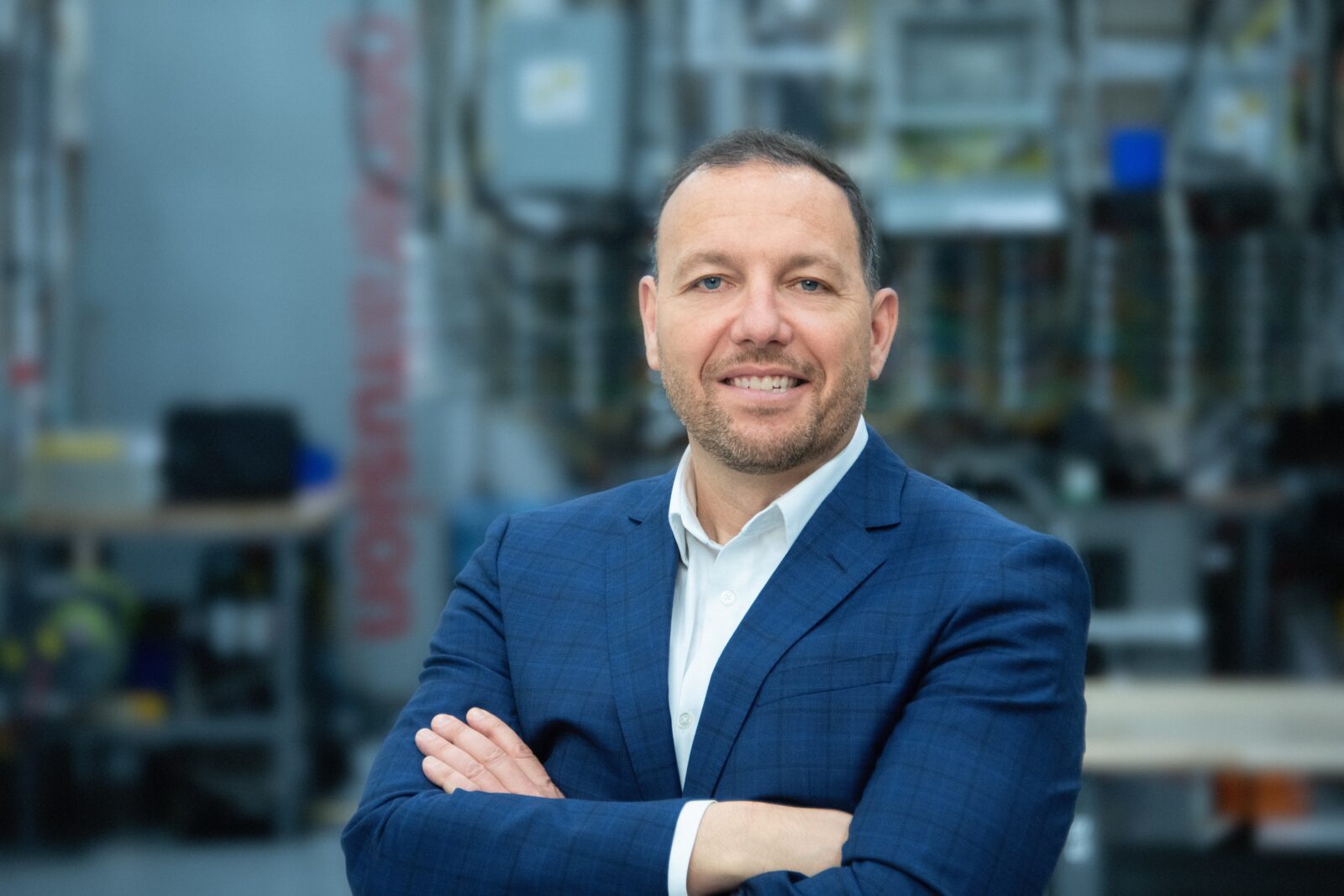
Greg Twinney brings a proven track record of executive leadership to General Fusion. He became CEO in 2022 after serving as General Fusion’s chief financial officer. During his tenure, Greg has expanded the company’s investor base, built deep relationships with industry partners, and promoted fusion energy on the global stage.
Greg’s experience prior to joining General Fusion demonstrates his ability to set the groundwork to create massive shareholder value for technology-enabled companies. With more than twenty years of experience commercializing new technologies, he has helped guide multiple companies through IPOs and mergers and acquisitions in various management roles, including at Real Matters, Kobo and Opalis.