

 YouTube
 Apple Podcasts
 Spotify
 iHeartRadio
 Podcast Addict
 Podchaser
 Deezer
 PlayerFM
 Castbox
 Goodpods
 RSS Feed
 Amazon Music
 How Institutional Capital Reshaped the SPAC Market — Vik Mittal, Meteora Capital

After 22 years investing in SPACs, Meteora's Vik Mittal calls the 2020-21 boom a destruction of capital. He explains how institutional money reshaped the market and why he's bullish now.
Key Takeaways
- Roughly 60–70% of 2020–21 SPACs liquidated, and most that closed went bankrupt before lockups expired.
- Institutional PIPEs first opened SPACs to long-only and long-short funds.
- Separating the shareholder vote from redemptions reshaped the asset class.
- Serial sponsors with real track records define today's market.
- Core-team risk capital beats fully syndicated sponsor deals.
Vik Mittal has been investing in SPACs for 22 years. His verdict on the 2020–21 boom: roughly 60–70% of vehicles liquidated, and a majority of those that closed went bankrupt before their lockups expired — what he flatly calls "a real destruction of capital." So why is he more bullish on the asset class now than he's been in years?
In this episode, Vik Mittal, Managing Member and CIO of Meteora Capital, joins host Mike Blankenship to unpack how institutional capital reshaped the SPAC market — turning a sleepy backwater product into a disciplined vehicle built around serial sponsors. Drawing on two decades on the buy side at Glazer Capital and years as a principal sponsor, Vik traces the arc from the first institutional PIPEs through the 2021 excess to today's renaissance. It's a clear-eyed practitioner's look at sponsor quality, valuation discipline, redemptions, warrants, and exactly where durable SPAC deals are getting done in 2025.
What We Cover:
- 📈 How institutional PIPEs first opened the SPAC market to long-only and long-short funds
- 🏦 Why separating the shareholder vote from redemptions reshaped the asset class
- ⚠️ The 2020–21 boom: liquidation rates, capital destruction, and the lessons learned
- 🔁 Why serial sponsors with real track records define the 2025 renaissance
- 💰 Sponsor alignment: why core-team risk capital beats fully syndicated deals
- 🧮 The PIPE as a valuation-discipline mechanism for investors
- 🚀 Where SPACs fit vs. a regular-way IPO — and the 10X target profile
- 🤖 AI infrastructure and digital assets as the new SPAC frontier
- 🎓 Advice for first-time sponsors: sit on a board before you lead
- 📰 The media's biggest misconceptions about how SPACs really work
Connect with Vik Mittal Website meteoracapital.com LinkedIn linkedin.com/in/vik-mittal-539903132
Connect with Mike Blankenship LinkedIn linkedin.com/in/mikeblankenship
About Winston Taylor Winston Taylor is an international law firm with a capital markets practice that works with companies and sponsors across the SPAC and public-company lifecycle. Learn more at winstontaylor.com.
Follow The SPAC Podcast
Website thespacpodcast.com
LinkedIn linkedin.com/company/thespacpodcast
YouTube youtube.com/@thespacpodcast
Disclaimer: Michael J. Blankenship is a licensed attorney and partner at Winston Taylor. Joshua Wilson is a licensed Florida real estate broker and holds FINRA Series 79 and Series 63 licensure. The content of this podcast is for informational and educational purposes only and should not be considered legal, financial, or compliance advice. All views and opinions expressed by the hosts and guests are their own and do not necessarily reflect the policies or positions of any regulatory agency, law firm, organization, or employer. Listeners should consult their own legal counsel, compliance teams, or financial advisors to ensure adherence to applicable regulations, including SEC, FINRA, and other industry-specific requirements. This podcast does not constitute a solicitation or recommendation for any financial products or services.
Let's Connect on LinkedIn:
https://www.linkedin.com/in/mikeblankenship/ https://www.linkedin.com/in/joshuabrucewilson/
To Contact Us, Please Visit:
https://www.TheSPACPodcast.com/contact/
Frequently Asked Questions
How did institutional capital reshape the SPAC market?
Vik Mittal of Meteora Capital explains that institutional PIPEs first opened the SPAC market to long-only and long-short funds, and that separating the shareholder vote from redemptions reshaped the asset class. Today serial sponsors with real track records define the market.
What happened to SPACs from the 2020–21 boom?
Mittal says roughly 60–70% of 2020–21 vehicles liquidated, and a majority of those that closed went bankrupt before their lockups expired, which he calls 'a real destruction of capital.'
What makes a SPAC sponsor credible to institutional investors?
He argues sponsor alignment matters: core-team risk capital beats fully syndicated deals, and the PIPE acts as a valuation-discipline mechanism for investors.
Who is Vik Mittal?
Vik Mittal is Managing Member and CIO of Meteora Capital, with 22 years investing in SPACs, including time on the buy side at Glazer Capital.
00:00 - Introduction: Vik Mittal and Meteora Capital
00:41 - 22 Years in SPACs: From Glazer to Principal Sponsor
04:07 - How the SPAC Market Evolved Across Cycles
05:07 - The First Institutional PIPE and Opening the Market
05:44 - The 2020–21 Boom and the Destruction of Capital
07:28 - The Trough of Disillusionment and the 2025 Renaissance
11:43 - Risk Capital and Financing a SPAC Transaction
13:58 - The PIPE as a Valuation-Discipline Mechanism
15:29 - The Media's Biggest Misconceptions About SPACs
19:39 - Advice for Targets and First-Time Sponsors
23:11 - Closing Thoughts
Michael Blankenship:
All right, Mike Blankenship here with SPAC Podcast. Today I'm joined by, uh, Vik Mittal from, uh, managing member of Meteora Capital. Vik, how are you doing? Tell us a little bit about yourself.
Vik Mittal:
Good, good. Hey, Mike, appreciate the time. It's good to connect again. It's been a little while since we last spoke and, uh, hope all is well. Yeah, it's fun times in the SPAC pod and, um, yeah. By way of background, so I've been an investor in the asset class for about 20, 22 years now. Um, I started my career at a firm called Glazer Capital, which is one of the bigger public players in SPACs. Um, you know, was doing, uh, event credit and converts, but, uh, the SPAC asset class caught my eye and, uh, we were involved as a sponsor of SPACs in, um, the mid 2010 to 2020 window. And when things got crazy in 2020, we went, um, all in on SPACs as a sponsor. And so we've, you know, sponsored probably a dozen vehicles and I think the biggest pivot is since I started this firm, Meteora Capital, uh, we've sat on boards and management teams as principal members, uh, of the SPAC vehicles. So we had the GSR Meteora SPAC, uh, that we raised with, uh, the GSR team, Gus Garcia, Lou Silverman and Anantha Ramamurthy, who are on their fourth or fifth SPAC now. We took Bitcoin Depot public back in 2023 under the Gensler administration, which was a really tough time. I think we learned a lot. And then moving forward, we've got a SPAC in the market right now, CSLM Digital Asset Acquisition Corp III. Um, it's in a publicly disclosed LOI with an Asian stablecoin, um, issuer First Digital. It's also a leading Asian agentic payments company. Um, you know, a promising transaction that, um, we're making progress with. But, uh, so far, we've disclosed, uh, a non-binding LOI publicly late last year with them. And then we raised another vehicle called Bitcoin Infrastructure, um, where I'm on the board of, uh, with a great CEO, this gentleman, Ryan Gentry, who's an aerospace engineer by background, is a, uh, was in Intel Capital working in the, the chip space. Uh, you know, really topical with what's going on with GPUs and GPU-as-a-service business models today, and then was at Multicoin Capital and then, um, at Lightning Labs, a layer two infrastructure player, and so a lot of deep sector domain expertise with AI hyperscalers and digital infrastructure and, uh, assets in that space. Um, and that was a recent December of '25 raise, so we're still in the search process. And, um, you know, have- we'll have a couple more vehicles out. Also, the, uh, executive chairman of Berto Acquisition Corp three, uh, two, excuse me, Berto Acquisition Corp two, which was, um… Our founder is Harry Yu, who's, uh, you know, publicly disclosed as the chairman of Broadcom, you know, a Fortune 5 company, um, you know, the number two player in AI chips, uh, behind Nvidia. And, um, we just priced that IPO two or three weeks ago. It was a 315 million raise that's focused on opportunities in the AI infrastructure space. So, you know, keeping ourselves super busy, um, with sponsorship, um, invest in pipes and other transactions. So we see a lot of, uh, activity across the SPAC ecosystem, not just with our own SPAC sponsored vehicles, but, um, we love to partner with other great management teams and entrepreneurs and founders that are going public through other SPAC vehicles and invest in their pipes and things of that sort. So, um, yeah, excited to chat about what we're seeing in the market today.
Michael Blankenship:
Excellent. Well, I appreciate that. So you've done it for more than twenty years. So what drew you into the SPAC market? And then sort of how has, you know, that, that asset class evolved over those years? I mean, there's been multiple cycles, so how have you seen it involved and, and, you know, since you started?
Vik Mittal:
Yeah, no, it's an interesting-- I don't think about that a lot 'cause it's like you're in it day to day, just as you are in it day to day. But, uh, you know, when it started, it was like the Legends Merchant crew. It was like a common and two warrants struck below trust and, um, there was maybe ten to twenty SPAC issuances per year. The vote and all that other stuff were tied to the redemptions. So it's, you know, it's kind of interesting, um, how it's evolved since the vote is separated from redemptions. And, uh, you know, the asset class was kind of a sleepy backwater product that really had, um, very little traction with institutional investors. Most, um, long only or long short fundamental investors by mandate could not invest in pipes or SPAC-oriented transactions until the company went public and was seasoned for two to three quarters. And so it became tough. I think the first SPAC to raise a pipe was Haymaker Acquisition, um, which was led by Andy Heyer and one of my old colleagues, Joe Tonnos, and, uh, Chris Bradley, who's on the board of one of our SPACs, the CSLM Digital Assets SPAC, and they raised like, I think, a hundred million dollar pipe. Against, um, it was, um, it was a health and wellness spa carved out of Catterton or Crestview maybe, or Catterton Partners. And as Fidelity and Monashee led the PIPE, and that really opened the market in like twenty nineteen maybe, twenty eighteen, for institutions to invest in PIPEs. And then we had the SPAC boom of late twenty twenty and early twenty one where there were seven, eight hundred SPACs, I think. And you had venture capital firms, private equity firms, growth equity firms, uh, retired CEOs. I think the outcomes were extreme-
Michael Blankenship:
Celebrities, athletes.
Vik Mittal:
Celebrity, yeah. Celebrities, athletes, yeah. Everybody. Yeah. Anybody who had like wealthy neighbors or friends at the golf club that they could raise like four or five million bucks from overnight, um, to get one of these vehicles stood up. And, you know, we were certainly, uh, drinking the Kool-Aid as well. We probably put a couple hundred million dollars into the sponsor asset class into independent SPACs that we didn't have control of at the time. And, um, it was not a great trade for many, many. I think the liquidation rates were in the sixty to seventy percent, and probably a majority of the ones that completed deals went bankrupt before the lockups expired on some levels. And so it was just a really destruction of capital. If you had seven hundred SPACs and say, ten million of risk capital into each one, it's like a seven billion dollar, um, investment asset class. And then folks like yourself and your peers at other law firms, how many bills did you guys get stiffed on, uh, you know, around closing and had to take IOUs and stuff? So there was a lot of great lessons learned. That was like certainly the depths of the cycle. And I think the twenty twenty-two to twenty twenty-four period, if you adapt like the Gartner Hype Cycle, was like the trough of disillusionment where everyone was like, "This thing's never gonna work again." And, you know, many of my friends in the industry left the industry and went on to do other things. Um, you know, folks like you and us like stuck around and saw the value of the product, and it's great to see the renaissance we've seen in twenty twenty-five, where it's largely an asset class and product with serial sponsors that have had success with prior vehicles, um, have a better pedigree. They, you know, manage money on behalf of institutional clients. They understand what it's like to have LPs. Um, some of the, you know, better organizations are… You've got sponsors that are on their fifth, sixth, seventh, eighth, ninth SPAC, whatever it may be. You know, folks like our partner, Harry Yu, who I think we're on our ninth or tenth SPAC on the Berto franchise, um, you know, after doing seven or eight DMY SPACs. And so those are the type of folks you wanna be aligned with, in my opinion, in the market and doing vehicles with. Um, the CSLM SPAC, we're partnered with Consilium Investment Management. Um, it's their second vehicle. It's a 25-year-old, um, organization down here in South Florida. It's focused on the emerging market, um, investment opportunity, um, in their funds. And so that's really, like, where we are in the cycle, and I think there's been some great deals done as we were talking about before this. You know, congrats on Boostrun and a few of the other, uh, transactions that you've been, uh, leading on and, um… And that's really what we're gonna I think we're gonna see selectively. Are all 300 SPACs gonna do great deals? Absolutely not. But I think you'll see, you know, 10 to 20% of the market come forward with durable companies that are sustainable, can raise institutional capital, and be, um, you know, compounders in the public markets over multiple years. And that's really where I think the SPAC product has found its niche as a way to access the public markets. I don't think you're gonna see a SpaceX or, you know, a high-profile, you know, even like, say, a, a company at a 5 billion enterprise value. I don't think you're gonna see a company at that level even, um pursue a SPAC IPO versus a regular way IPO. But, you know, something in that five hundred million or even lower sometimes for these small growth stories that could be 10Xs that come out at two, three hundred million. It's instead of doing a series B or C, they do the SPAC deal, and if it's a business that's profitable and sustainable and can be in the public markets, um, those are the type of stories that I think SPAC investors are really looking for, and those are the ones we're excited to be part of that legitimately can be 10Xs, that are those two hundred million pre-money stories up to a billion to two billion kind of things that could be a twenty billion story. And like, you know, when we talk to targets, um, you know, as it relates to, like, the Berto SPACs, you know, Harry, you know, cites them IonQ, you know, the first quantum computing company that came public at a couple billion dollars, uh, standalone quantum computing company, and now it's trading at, like, a north of a twenty-five billion market cap last I looked. And, you know, Quantinuum did a regular way IPO. It, I think, like, a… I think it was trading, like, at a seventeen, eighteen billion market cap yesterday on the IPO broke. And so that's just… You know, and, like, Quantinuum, hopefully they, they send some shares over to IonQ's way, 'cause I don't think that type of IPO could have been possible without IonQ leading the way. And so that's where I think the SPAC product helps, is that it can accelerate that go-to-market process for great private companies that the regular way IPO market may say you're two to three years away for.
Michael Blankenship:
Yeah, and so what, like, on that, that very good point, and I think we're seeing a lot of those kind of changes over the, over the years as you point out. But how do you think about the role of risk capital kind of on the front, and then financings to support a SPAC transaction? Like, 'cause that ecosystem certainly has changed since 2020, 2021, but, you know, there was a lot more of it and syndicated stuff. But how do you think about that?
Vik Mittal:
Yeah, the syndicated stuff's, uh, a double-edged sword. As we think about it as, like, a principal investor and taking syndicated capital on our SPACs, we've always wanted to have a majority of the capital coming from our core sponsor team. Mm-hmm. Um, I think it shows better alignment. Some of the issues we saw in 2020 and 2021 was that the entire risk pool was syndicated to third parties, and so the sponsor group really didn't have enough skin in the game to properly incentivize them to do the right deal. It was just like, get any deal done, was kind of the mindset. And I do think we've slipped a little further back with some of these, probably the vast majority. I haven't looked at the data, but, um, if I had to guess, and I think it'd be an informed guess, 75%-plus of SPACs that had non-managing member capital in the risk pool was like 7… It was 75 to 90% was, um, two-thirds or plus from third-party hedge funds and institutions taking, like, a, a Y Combinator kind of diversified bet. And selfishly as a SPAC sponsor, you don't want there to be 300 SPACs out there. It's just really, like, kinda, it's a lot of noise in the system, and wish there was a little more discipline. And what we've seen in the last couple quarters Is that the market is now being more discerning, and the institutional hedge fund community is not backing, you know, every sponsor that they get an outbound call from a bank on that,"Hey, we're raising a 10-handed deal. Are you in for 500K?" kinda thing. And so I think the discipline's coming now. I wish the discipline had come, like, 12 months ago. Um, but the backend financing is, you know, is, is fairly critical from a positioning standpoint for companies that do not have discipline on the front-end valuation. Um, nine out of ten times, a company that goes public without a PIPE or any sort of valuation validation goes public at the wrong valuation, too high. And so the PIPE becomes a nice discipline mechanism that investors should look at. And the only time I look at a deal without a PIPE, like the Boostrun, you know, great example. It came at a relatively conservative valuation. The stock's, like, in the 30s. Just as an outsider, we have no, you know, inside info on the company. But, um, didn't have a PIPE from whatever, and investors were all across, and they looked at it, and they saw interest. And the company in a-- had a plan to raise capital through keeping the trust. And, um, you know, those are the stories that you like. And so, you know, what I would say for investors looking at the companies that come at reasonable valuations and that you have a many multiples of capital return upside potential is the way I would position, um, it as a sponsor if it's not a more durable company that has raised, you know, an institutional PIPE to validate the valuation. And so I think those are the key tells that everyone should be looking at.
Michael Blankenship:
Yeah, I couldn't agree more. I mean, I work on a lot of these, as you know, and seeing that, that valuation be so astronomical compared to where the previous phrase was, it's like, I don't know how you justify, especially with the SEC coming out and not allowing these projections to, or at least get the safe harbor-
Vik Mittal:
Yeah
Michael Blankenship:
on multiple years of, of projections. So people are, are taking a leap of faith that somehow you're going from that particular one, that the, this massive hockey stick valuation- Mm-hmm … that, uh, magically happened. So you have to be careful if you're a founder or a, another one. And which leads to my next question for you, is like, what do you see as sort of the biggest misconceptions the media has about SPACs? You know, that you've been, you know, a lot of the media that's out there, you know, sometimes puts it in a bad light, which is kinda hurting the industry there. So how do you see the media's and the biggest misconceptions on SPACs? How would you correct that?
Vik Mittal:
Yeah. No, I mean, it's, it's an oddity. It's like the negative bias it's like the negative bias in the media is like a vestige of the, like, excesses of 2021 and a lack of understanding. Like, no offense to Andrew Ross Sorkin. Um, you know, I'm sure he's a brilliant individual on CNBC, the CNBC commentator, but I don't think he understands how the redemption mechanism works and things of that sort. Like, he gets, like, folks like Anthony Pompliano on there, and when he was doing his digital asset treasury deal for the Columbus Circle BRR thing, I remember watching, like, he was, like, not even asking the fundamental questions about how the redemption works and what is the MNAV calculation and, uh, you know, it's like a financial reporter. And so I think the old adage that SPACs are like a four-letter word is, like, somewhat true, and that's why I think investors have to really segment in the market who are, like, the proven deal makers, C-suite operators, have decades of experience. In raising capital and taking companies public, um, what are the terms of the IPO? Like great example, like the Michael Klein Churchill franchise. He just did like a tenth of a, a warrant, um, on his most recent SPAC. You know, that's a great signal to the market that institutions-- to the broader market that institutions look at an individual like Michael Klein, who's arguably, along with someone like a Frank Quattrone, um, this generation's finest deal makers with access and a Rolodex, uh, globally unrivaled by, you know, anyone but, you know, the CEOs of money center banks. Um, and so that's just an incredibly attractive position to be in, to be an investor in the SPACs that that he brings to market in the Churchill franchise. And, you know, not to toot our own horn, but, you know, I would say someone like our, um, founder of the Berto franchise, you know, Harry Yu. You know, it's just his resume is his resume. He was the former CFO of Oracle, led the acquisition and integration of PeopleSoft, um, and then was in the office of the chairman at, uh, EMC and was heavily involved in VMware, and then, you know, the ultimate sale of EMC and VMware when he was at Broadcom as a director, and now he, uh, he's the chairman of Broadcom. Um, that acquisition of VMware and, you know, he's sitting at the center of what's going on in this AI hyperscaler and, um, really overall AI, you know, ecosystem. And so for me, just like putting on my investor hat, those type of sponsors are the ones I wanna be aligned with and should have the highest probability. No guarantees that they'll do anything great, but those are the ones that you would like to believe have the best probability of doing something that is interesting to the public markets.
Michael Blankenship:
Yeah, and I guess kind of going forward, what, what advice would you give to somebody looking to be a sponsor that's not a repeat, obviously? What… And the advice kind of looking forward if somebody's looking to participate or if you're a, a company, like, how would you advise each party within the SPAC, um, ecosystem?
Vik Mittal:
Yeah. I think the easier is, easiest one for the target side is to hire expert counsel. And so not to give you a, a marketing plug here, but, you know, I've known Mike for a long time. His team is, like, top decile. You wanna look at the tombstones that the counselor has. We wanna see how many SPAC transactions they've been on on the target side, how many they've been on the sponsor side, because it's a complicated product, and it's, it's a very foreign product for corporate issuers. There's a lot of complexity around, um, the regulatory process, the SEC process, and the listing process, that it takes a really experienced counselor who's got a lot of track record in the space and spends all day doing this. Um, the last thing you wanna see when you're an operating company, um, is that your counselor is great at being a public company counsel but has no real depth of experience in the SPAC asset class and helping operating companies go public through the SPAC asset class. And it's painful on all sides if the operating company's counsel doesn't have that experience 'cause ultimately that's the counsel that's gonna drive this whole process and be there post-closing'cause, I mean, you would know better than me, Mike, but I think it's, like, 95% of the time the operating company's counsel stays on as, you know, the company counsel post-closing, right? It
Michael Blankenship:
does. But we've taken over four or five of them post-closing. We have such a good team that- Yeah,
Vik Mittal:
but that's 'cause you, yeah, but that's 'cause you know the process in a way and the product in a way that, like, probably the operating company not having been under the tent was like,"Oh my God," like, you know, "We're not gonna survive if, uh, if we've got, you know, XYZ counselor staying on." And, you know, you were driving the process as if, you know, you're gonna be the counsel for the company post-close. But that's rare. I mean, there's a, you know, there's a handful of counselors and law firms that bring that pedigree, and certainly, Mike, you know, we put you in the highest regard there as, you know, knowing how to get this stuff done and move it over. And then from, like, somebody who hasn't been a SPAC sponsor- And wants to be a SPAC sponsor, I actually say the best way to do it is to sit on the board first for a relationship SPAC that's done it. Because they're… That's, that's a, an existing SPAC, and learn that way. Learn passively as opposed to being the tip of the spear.'Cause I promise you, like, in the hundreds of SPAC sponsors we've had great relationships with, maybe not hundreds, but maybe, say, 75, if I had to put a round number on it, and if we're playing Wheel of Fortune, I think it'd be right, right around 75. Of those that were first-time sponsors, every one of them comes to me and says, like, "Vik, I really wish we had a do-over here, 'cause we spent the first year figuring out what the heck this product is about and how to do it the right way." And, um, and that's like, you know, we call it the scar tissue of the product, 'cause it's like, it's a really difficult product for parties who haven't been in the ecosystem for a long time to wrap their head around. And it's a little bit of an insider's product, and so, you know, who wants to be involved in something that you're not an insider on?
Michael Blankenship:
Yeah. I mean, you definitely don't wanna be on the outside looking in- Yeah … when there's so much sort of financial stuff at stake here. So, but look, I, I appreciate your time today. Um, I don't know if there's anything you wanna add, uh, as we wrap up here, but again, very insightful. Been in it for a while. Um, certainly know the product and certainly know the various companies, so, um, I appreciate you coming out.
Vik Mittal:
Yeah. Good stuff. And, uh, I, I assume I'll see you at the SPAC conference in a, a couple weeks or a week or something?
Michael Blankenship:
Yeah, I'll be at the SPAC conference, and I'm actually- All right, very good … speaking on a panel, so.
Vik Mittal:
Excellent. Um, good, uh, see you there. I think my colleague Henry is, uh, speaking on a panel as well, but, uh, always good to catch up and, uh, look forward to continuing to cross paths.
Michael Blankenship:
Sounds good. And well, thanks again, Vik, so.
Vik Mittal:
Sounds good.
Michael Blankenship:
It's Mike with the SPAC Podcast.
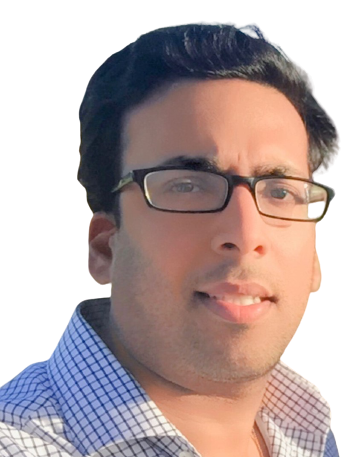
Managing Member & CIO
Vikas Mittal is the Managing Member of Meteora Capital, LLC, an alternative investment firm he founded in January 2022, where he deploys capital across event-driven and structured investment strategies. Meteora Capital manages capital across liquid and illiquid investments and has experience throughout the full SPAC lifecycle. Prior to founding Meteora Capital, Mr. Mittal was an investment professional at Glazer Capital, LLC from 2005 to 2021, where he focused on event-driven and structured investments across public and private markets. He began his career in 2002 on the founding team of Raymond James’ Technology, Media & Telecommunications investment banking practice in Palo Alto, California.
Mr. Mittal brings over 20 years of buy-side investing experience as a principal investor and nearly two decades of involvement with special purpose acquisition companies, spanning sponsorship, capital markets and post-combination value creation. He currently serves in leadership roles across several SPACs, including Co-CEO, Chairman and CFO of CSLM Digital Asset Acquisition Corp III, Ltd.; CFO and director of Karman Line Acquisition Corp.; CFO of Berto Acquisition Corp.; Executive Chairman of Berto Acquisition Corp. II; Principal Executive Officer and director of Libity; director of Bitcoin Infrastructure Acquisition Corp.; and CEO and CFO of Invest Acquisition Corporation.