

 YouTube
 Apple Podcasts
 Spotify
 iHeartRadio
 Podcast Addict
 Podchaser
 Deezer
 PlayerFM
 Castbox
 Goodpods
 RSS Feed
 Amazon Music
 IQM's Billion-Dollar-Plus SPAC: Taking Quantum Computing Public with Jan Goetz & Peter Ort
What does it take to bring a billion-dollar-plus quantum computing company to the public markets? In this episode, IQM co-founder and CEO Jan Goetz and SPAC sponsor Peter Ort reveal why a European quantum leader chose a SPAC over a traditional IPO, and how deal certainty and timing ultimately shaped the decision to go public now.
Host Michael Blankenship is joined by Dr. Jan Goetz, co-founder and CEO of IQM Quantum Computers, and Peter Ort, SPAC sponsor and General Partner at Cambium Capital, for a candid look at one of the most closely watched deals in the quantum computing space. The conversation traces IQM's path from a 2018 Aalto University spin-out to a full-stack, vertically integrated quantum company that has now shipped 23 systems worldwide. Goetz and Ort discuss the SPAC transaction with Real Asset Acquisition Corp., why public-market capital can accelerate a long-term technology roadmap, and what comes next for superconducting quantum computing.
What We Cover:
- Why IQM chose a SPAC over a traditional IPO
- Deal certainty, timing, and execution in a SPAC transaction
- IQM's full-stack, vertically integrated model and proprietary chip fab
- Deploying quantum computers at scale inside live data centers
- The recent Oak Ridge National Labs on-prem delivery
- How public-market capital accelerates a tech and product roadmap
- IQM's competitive position in the superconducting modality
- The 2025 Series B round and the company's capitalization picture
- Where quantum computing is headed: error correction and beyond
- What the partnership between IQM and Cambium Capital looks like
Connect with Mike Blankenship:
LinkedIn linkedin.com/in/mikeblankenship
Connect with Jan Goetz:
Website iqm.tech
LinkedIn linkedin.com/in/jan-goetz
Connect with Peter Ort:
LinkedIn linkedin.com/in/peter-ort-5102a013
Website curaleaassociates.com
About Winston Taylor:
Winston Taylor is an international law firm with a capital markets practice that works with companies and sponsors across the SPAC and public-company lifecycle. Learn more at winstontaylor.com.
Follow The SPAC Podcast:
Website thespacpodcast.com ·
LinkedIn linkedin.com/company/thespacpodcast ·
YouTube youtube.com/@thespacpodcast
Disclaimer: Michael J. Blankenship is a licensed attorney and partner at Winston Taylor. Joshua Wilson is a licensed Florida real estate broker and holds FINRA Series 79 and Series 63 licensure. The content of this podcast is for informational and educational purposes only and should not be considered legal, financial, or compliance advice. All views and opinions expressed by the hosts and guests are their own and do not necessarily reflect the policies or positions of any regulatory agency, law firm, organization, or employer. Listeners should consult their own legal counsel, compliance teams, or financial advisors to ensure adherence to applicable regulations, including SEC, FINRA, and other industry-specific requirements. This podcast does not constitute a solicitation or recommendation for any financial products or services.
Let's Connect on LinkedIn:
https://www.linkedin.com/in/mikeblankenship/ https://www.linkedin.com/in/joshuabrucewilson/
To Contact Us, Please Visit:
00:00 - Introductions: IQM and the guests
00:13 - Jan Goetz on IQM and full-stack quantum
01:46 - Peter Ort's background and what makes IQM special
03:14 - The Oak Ridge National Labs delivery
04:30 - IQM's competitive advantages: tech and business model
07:16 - Why IQM is a fit for the SPAC
08:13 - Why go public now, and why via SPAC
11:00 - Deal certainty, timing, and choosing a partner
12:04 - Why RAAQ is the right partner for IQM
12:50 - What comes next after closing
14:23 - Closing thoughts
Michael Blankenship:
Mike Blankenship here with The SPAC Podcast. Today, I'm joined by Jan Goetz and Pete Ort. Uh, Jan, um, why don't we start with you? Give us a little background about yourself and, uh, about IQM.
Jan Goetz:
Yeah. So, uh, I'm one of the co-founders of IQM. Uh, I have a physics background. IQM is a quantum computing company, and, uh, many, um, quantum computing companies have been started as university spin-outs, uh, which is also, um, the case here. So I worked, um, at a university in Helsinki in Finland, at Aalto University, which is one of the leading universities actually when it comes to, um, quantum computing. And, um, we, we got the technology in the labs, um, to a level where we could build first prototype quantum computers in around 2018. And we decided actually then to spin out a company, to commercialize it, to productize it, and this is what IQM does. So we build full stack quantum computers based on superconducting technologies and, um, we, um, are very much a vertically integrated company. We design and produce our own chips, so we run our own chip factory on, uh, on silicon wafers. Uh, we do all the assembly of the computers, um, so we have a full assembly line. And then, uh, from a business model perspective, we either sell the computers to data centers or we sell computing time through the cloud. So we are running our own, um, data center in, in Munich where we have quantum computers in the cloud, which we either distribute directly or through AWS. And where we are really leading and special is in this deployment of quantum computers into data centers and, and supercomputing centers. We are the company that has sold most quantum computers globally. It's 23 systems that we have sold around the world in the US, in Europe and in Asia
Michael Blankenship:
That's amazing. Um, so Pete, tell us a little about yourself and, and, you know, in your view, what makes IQM special?
Peter Ort:
Yeah, thanks Michael. Uh, so, uh, my name's Peter Ort. I've been on Wall Street 30 years. I started, uh, the first dozen years were at Goldman Sachs. Um, but more recently, um, I've been an active SPAC sponsor, and I'm also a partner at a venture capital firm called Cambium Capital. Uh, Cambium is very narrowly focused on advanced computing, including Quantum. Uh, my partners, Landon Downs and Dave Moehring, have been very active, uh, as, um, entrepreneurs, operators, and investors in the quantum ecosystem for 20 years. Uh, Dave, for example, was the founding CEO of IonQ. Um, so- and we've made a number of investments, uh, across Quantum over the years. Um, we also have an affiliate in, uh, based in Copenhagen called 55North, and 55North participated in the IQM B round last year. So we've known about IQM for many years and have long admired the company. Um, and there's a number of points as to why, uh, IQM was very much at the top of our target list when we launched the SPAC back, uh, last year. Um, so IQM is widely recognized as the leading quantum company in Europe, but much more than that, it has emerged as a top three global competitor. Um, they've delivered systems across Europe, but also throughout Asia. And then, uh, just last week, uh, they announced, uh, a delivery to Oak Ridge National Labs, uh, here in the US, and the fact that Oak Ridge chose a European vendor for their first on-prem system is really a testament to the quality of IQM's, uh, technical capabilities. Uh, within the superconducting modality, we believe they are the leading independent company. Uh, they're a full stack company, uh, so they design and manufacture their own chips in their own proprietary fab. They assemble their own machines, and they build and deploy their own software stack. Um, the company was founded only in 2018, so the achievements that they've had in eight short years is quite remarkable, especially when you look at some of the US competitors that were founded much, much earlier. Uh, they've become a real magnet for talent, not just across Europe, but really across the world. Um, they have over 300 folks on staff now. That includes, uh, over 100 PhDs, and those folks are from almost 60 different nationalities, uh, which speaks to the fact that this is much more than just a European company. And then the last thing I would point to is the commercial traction that they've got, and Jan touched on this already. But they've delivered more on-prem systems than any other quantum vendor
Michael Blankenship:
Thank, thanks, Pete. So Jan, what do you view as your competitive advantages? I know, uh, talked about it just a minute ago, but what are your thoughts on competitive advantage?
Jan Goetz:
Yeah, I think that's a good question, and you can look at this from two angles. Uh, one is the technology side, so what makes our technology special, and the other one is the, the business model and, uh, how can we compete in the market. And I think we have actually competitive advantages on, on both sides. So, um, we already talked a little bit, um, on, on the operations of the company. So being able to deliver quantum computers at scale, that's actually something that you don't develop overnight, right? You need a, a fully fledged factory, um, you need a, a whole team that works on delivery and, and, um, service and, and the like. But you also need to have systems that actually seamlessly integrate in data centers. Um, as many people know, data centers are environments where it's quite noisy, it's, it's quite hot, there's … kind of the floor is shaking. Um, and this is actually not the most friendly environment for quantum physics. Um, but we have managed actually to develop computers that really fit directly on the same floor next to the racks full of GPUs and in CPUs, and they run 24/7. And, and this is something, um, that, that makes our products really special, um, is they're, they're, they're very stable, very much self-calibrated, and this is why we can actually deliver and deploy them at scale. But then if you look at the technology, um, very similar to a normal computer, what you need is performance, right? You want to solve some of the hardest problems in the world, and this means you need to get the best out of the machine. And, um, given that we are so vertically integrated, we can actually develop our own chip design, we can test and validate our own chip designs and, and make them very, very hard, very efficient. And this is something, um, where we are leading. Um, we, we are leading on the component level, so we have elements on the chips, uh, which are much faster and much higher quality than what others do. But also the chip architecture itself that we are using is actually extremely hardware efficient. There was just recently, there was an independent study from MIT in Boston, some researchers there, and they have been comparing the different approaches how to build quantum computers, and we were clearly leading there when it comes to hardware efficiency of, of our chips. So this is why we, um, think that we are actually very competitive, both from a business perspective, but then also from a technology perspective, and this is the reasons why customers actually choose us. Like Pete mentioned, Oak Ridge, it's, it's the second largest super computing center in the world actually, uh, based in the US, and they chose our technology as the first technology that they, uh, want to go with. So there's no other kind of, um, quantum computer deployed there yet. And I think this really speaks to the technology and the products that we are building.
Michael Blankenship:
Yeah. And Pete, you touched on it a little bit, but why is IQM a, a, a great investment, uh, opportunity for, for your SPAC?
Peter Ort:
Yeah. So because of the, the technical advances they've made and the commercial traction that they've delivered, um, they really actually compare extremely favorably versus the other, uh, companies in the quantum peer group, many of which have already gone public, most of which have done it through SPACs as well. Um, so if you look at 2025 revenue, for example, IQM is in the top three of this entire peer group. Um, and yet the valuation, um, at which we're doing this deal, which is approximately $2 billion, um, at closing, uh, is really in the bottom three, uh, when you compare the market caps of the companies that are already public. So we think that, that this deal really represents, uh, very good value
Michael Blankenship:
And Jan, so you're a target to a SPAC, uh, transaction. What, why, uh, go public now via SPAC? You've been around since 2018. W- why now?
Jan Goetz:
Yeah, and I think there, there are two questions to this. Why go public, and, and why do it via a SPAC? Um, we raised, um, a B round, uh, in 2025, and this was $320 million round. Um, so we are actually quite well capitalized. Um, but then usually what happens, um, in this kind of tech growth sector is after the funding round is before the funding round. And we sat down together after we closed, um, our, um, series B round in, in 2025 and thought, what's actually the best way forward to really build here a global leader for quantum computing? And, um, we, we have seen that the companies that went already public, like Pete alluded to, um, a few years ago, actually they have been doing quite well on the public markets, and our numbers were comparable or even better, um, than, than the numbers that, um, that our peers have. Um, so we did see actually there an opportunity, um, to go also in this direction. And also, and what we have seen is that, that others have been raising, um, quite significant amounts of, of capital on, on the public side. Um, and, um, we, we do think that, that going forward, having the amount to, to capital really will accelerate our tech roadmap and, and our product roadmap. Um, of course, then you have also other side effects, um, like visibility, especially in the US. Um, I, I mentioned we have been selling in the US but the ambition, of course, is to grow even stronger. Um, and, um, the, the visibility that you get, um, of course is, is helpful there as well. Other side effects might be that, of course, the business, um, is under much more scrutiny, and you might think that this could be also a kind of a disadvantage or a challenge. But actually, the business we are in, where we are selling to these advanced super computing centers, they're looking for long-term trusted partners, and they want to make sure that the companies they buy from, they still exist down the road. And I think the additional quality stamp that, that the business gets by going through all of this financial diligence as well, um, is, is helping us. And of course, you have other, um, topics like you can incentivize the team, um, differently if, if you go public and, and the like. So there were many reasons why we thought actually going public is, is the right thing to do. The markets were there. Um, I think there is a huge demand for compute, especially what's happening in the AI field at the moment shows that we need urgently, we need more compute and, um, and quantum can be helpful here. So clearly there was a, an opportunity and, and then we thought, okay, what's the best way of doing this? Um- And, um, the way we have been looking at this is that we are a, a company that has originated from Europe, and we have a lot of, uh, also institutional support here in Europe, like pension funds and governments backing us. But obviously, um, key markets, especially also when it comes to the capital side, is in the US, so we, we… It was clear we wanted to go public, um, in the US, and there we thought it would be helpful actually to have a partner on our side. Um, and, and if you do it through a SPAC, this is what you get, right? You, um, you, you get the SPAC sponsor and, and you get the, the partner there. Um, and, um, w- for, for us this was one important aspect, and the other, um, important aspect was deal certainty and timing. Um, so, um, especially, um, when, when we were planning this, people were discussing is there going to be an AI bubble that bursts, and things like this. So we wanted to make sure that we have actually a very stringent execution plan, um, and, and, and clarity on, on timelines and, and execution. And this is also what you, you get with a SPAC, I think much more than maybe with a, um, traditional IPO. So this is why we decided then back in the day, yeah, we go public, um, and, uh, we do it with a SPAC, and we were super happy, uh, to have found RAAQ and, and with, with, with Pete and the rest of the team, um, I think a, a really excellent partner.
Michael Blankenship:
Yeah. And Pete, so why is RAAQ or Real Asset Acquisition Corp., um, a good partner for IQM? Like, what, what were your sort of your selling points there to them?
Peter Ort:
Yeah, and I touched on this a little bit earlier. Um, so, you know, through the work that we've done at Cambium and 55 North, you know, we believe we're the leading, uh, investor in the quantum ecosystem, certainly at the early stage. Uh, we have this relationship with the company already. Um, you know, we have a deep technical understanding of the different modalities across quantum, across quantum. We have very strong views on the different modalities and the companies within each one. Uh, and IQM really is, um, a world-class, uh, company and a world-class asset, and Jan and the rest of the management team are really outstanding.
Michael Blankenship:
Yeah, and Jan, as, as we sort of wrap up here, what, what do you see as next? What comes next for you all once you close the transaction?
Jan Goetz:
Yeah, of course, we are looking very much forward to closing the transaction, but, but for us this is just the beginning, right? Um, and, uh, we are super excited of, of what comes next. Um, quantum is, is similar to semiconductor, um, industry, where we have very long-term road maps. Um, so we have a road map that goes deep into the 2030s where we bring, um, and de- uh, develop, uh, new computer generation basically every year. Similar to what Moore's law has done in, in semiconductors, we see a similar dynamics in quantum. And of course, we are super excited about the next product generations that we bring out, where we will implement new features like error correction, and we will be able to go into computational regimes where no one else has been before. This is the whole promise of quantum, that you can solve problems where we know today you will never be able to solve them, even with the biggest super computers. And of course, this is something that we're super excited about, pushing the, the technology and, and unlocking all the exciting applications for quantum. And then, of course, uh, I, I mentioned we, we are globally leading when it comes to deploying these machines and, and this is an ambition that, that we have also going forward. So, um, growing commercially, um, is, is clearly ambition that, that we have. Um, and, um, there are many, many computing centers out there which don't yet have a quantum computer in- inside. Um, I think there's also huge potential still on, on the cloud side and in this part of the business, and this is clearly something that's the, the team is, is super excited and, and super focused about is growing the business as well.
Michael Blankenship:
Yeah. Quantum computing is very, uh, fascinating and- and certainly seen a lot of, uh, activity in the, the SPAC space. So, um, look, I appreciate you both coming on. I don't know, Pete, if you had a last word you wanna, uh, give folks as you guys are getting close to closing. And congratulations on going effective with the registration statement.
Peter Ort:
Yeah. Thanks, Michael. No, it's been a real pleasure throughout this whole process to be partnered with IQM, uh, and, and the team and, and we couldn't be more excited about closing this and, and getting IQM into the public markets.
Michael Blankenship:
Terrific. Well, thank you both. I really appreciate your time today. Uh, this is Mike with the SPAC Podcast.
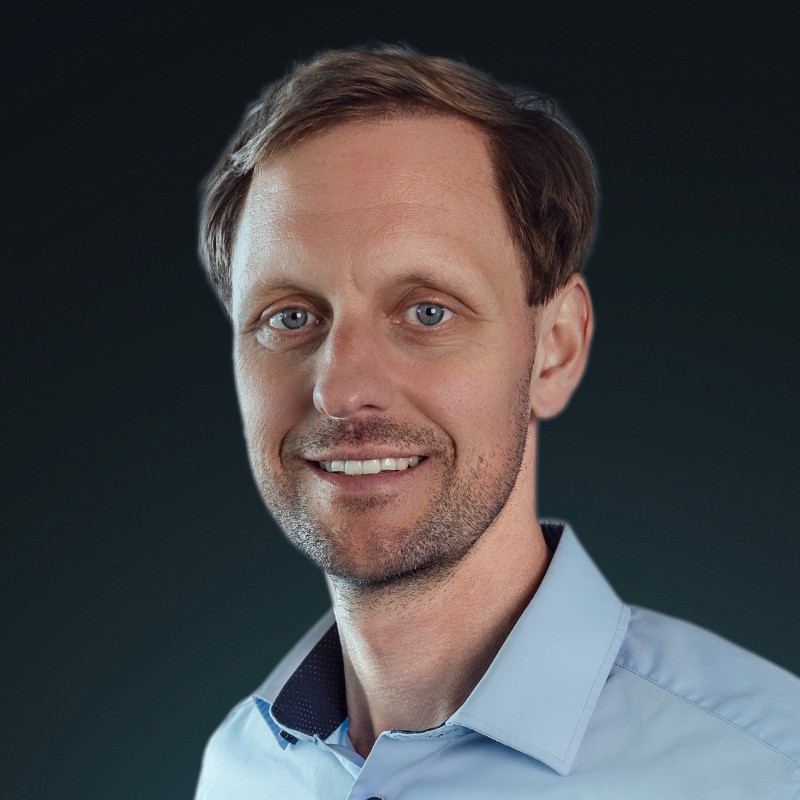
Co-Founder & CEO, IQM Quantum Computers
Dr. Jan Goetz is the co-founder and CEO of IQM Quantum Computers, a global leader in full-stack superconducting quantum computers. He spun IQM out of Aalto University and the VTT Technical Research Centre of Finland in 2018 and has since raised over $600 million in capital for the company, including the largest Series B funding round in quantum computing outside the United States. Under his leadership, IQM has shipped more on-premises quantum computers than any of its competitors, serving leading high-performance computing centres, research institutions, and AI-driven organizations worldwide.
A quantum physicist by training, Dr. Goetz completed his doctorate on superconducting quantum circuits at TU Munich and worked as a Marie-Curie Fellow at Aalto University in Helsinki. He is a named inventor on key IQM intellectual property and a recognized voice in the global quantum industry, serving as an ambassador for the European Innovation Council (EIC) and holding a board seat in the European Quantum Industry Consortium.
Connect with Jan on LinkedIn at https://www.linkedin.com/in/jan-goetz/ and learn more about IQM at https://www.iqm.tech/
Co-Founder & Managing Member, CurAlea Associates
Peter (Pete) Ort is co-founder and Managing Member of CurAlea Associates, an award-winning firm providing customized risk software and advisory solutions to hedge funds, wealth managers, and asset managers. He is also a General Partner at Cambium Capital, an early-stage venture capital firm focused on advanced computing companies, and serves on the board or advisory board of numerous companies across the technology and capital markets landscape.
Pete brings deep capital markets and SPAC experience to his work. He previously served as a director and advisor to blank-check companies, including roles connected to Concord Acquisition Corp, and has been active in structuring and advising on SPAC transactions. Earlier in his career, he was a Managing Director at Karsch Capital and a Managing Director at Goldman Sachs, where he was co-head of the Hedge Fund Strategies Group and worked in the firm's Private Equity Group and Financial Institutions Group in New York and Tokyo.
A Fulbright Scholar in Japan, Pete graduated from Duke University and earned J.D. and M.B.A. degrees from New York University. He is a member of the New York and New Jersey State Bars.
Connect with Pete on LinkedIn at https://www.linkedin.com/in/peter-ort-5102a013/ and learn more about CurAlea Associates at http://www.curaleaassociates.com/