YouTube

 Apple Podcasts

 Spotify

 iHeartRadio

 Podcast Addict

 Podchaser

 Deezer

 PlayerFM

 Castbox

 Goodpods

 RSS Feed

 Amazon Music
Going Public Twice: Lessons from a Traditional IPO and a de-SPAC — Ben Wolff
Ben Wolff, President, CEO and Co-Founder of Palladyne AI, joins Mike Blankenship to compare taking companies public through a traditional IPO at Clearwire and a de-SPAC at Sarcos, why he traded more dilution for deal certainty, and what audited financials, public-company costs and investor demands mean for CEOs.
Key Takeaways
- Ben Wolff sees traditional IPOs and de-SPACs as different tools for different purposes: the right choice depends on the company's circumstances and on market conditions at the time.
- He believes a de-SPAC can suit companies with a strong forward-looking story that are not yet producing significant cash flow, even after the 2024 rule changes, while a profitable company with a clean financial track record is usually better served by an IPO.
- For Sarcos, the de-SPAC meant negotiating a valuation with one SPAC sponsor and securing PIPE commitments from a handful of investors, which gave certainty in exchange for more dilution and a higher overall cost of capital.
- Ben says the biggest roadblock for private companies is getting their financial house in order, including two years of audited financials, well before the marketing process begins.
- Being public is expensive and changes the job: Ben now spends far more of his time with investors, analysts and media than he did as a private-company CEO, and his advice to first-time public company CEOs is not to take the daily stock price personally.
Ben Wolff has taken companies public both ways: a traditional IPO at Clearwire, and a de-SPAC merger at Sarcos, now Palladyne AI. He explains why the de-SPAC traded more dilution for greater certainty, and why he'd make the same choices again.
Mike Blankenship talks with Ben Wolff, President, CEO and Co-Founder of Palladyne AI Corp. (Nasdaq: PDYN) and a former capital markets and M&A lawyer, about choosing between an IPO and a de-SPAC. Ben compares the two processes, explains when a de-SPAC suits a company with a forward-looking story, and shares why Sarcos negotiated a valuation with its SPAC sponsor and a PIPE. He covers audited financials as the biggest readiness hurdle, the real cost and time demands of public company life, leading the pivot from robotics hardware to AI software, and his advice for first-time public company CEOs.
What We Cover:
- IPO vs. de-SPAC: different tools for different purposes
- Which companies are better suited to each path
- Why Sarcos chose a de-SPAC merger in 2021
- Negotiated valuation, PIPE commitments and deal certainty
- The trade-off between certainty and dilution
- Why audited financials drive the going-public timeline
- The ongoing cost of being a public company
- How the CEO and CFO roles change after going public
- Leading the pivot from Sarcos to Palladyne AI
Connect with Ben Wolff:
Website: palladyneai.com
LinkedIn: linkedin.com/in/ben-wolff-1b49bb24
Connect with Mike Blankenship:
LinkedIn: linkedin.com/in/mikeblankenship
About Winston Taylor:
Winston Taylor is an international law firm with a capital markets practice that works with companies and sponsors across the SPAC and public-company lifecycle. Learn more at winstontaylor.com.
Interested in joining a future episode?
The SPAC Podcast is part of One Iron Network. Reach out at thespacpodcast.com and explore the network at oneironnetwork.com.
Follow The SPAC Podcast:
Website: thespacpodcast.com
LinkedIn: linkedin.com/company/thespacpodcast
YouTube: youtube.com/@thespacpodcast
A One Iron Network production: Executive Producer Joshua Wilson
Disclaimer: Michael J. Blankenship is a licensed attorney and partner at Winston Taylor. Joshua Wilson is a licensed Florida real estate broker and holds FINRA Series 79 and Series 63 licensure. The content of this podcast is for informational and educational purposes only and should not be considered legal, financial, or compliance advice. All views and opinions expressed by the hosts and guests are their own and do not necessarily reflect the policies or positions of any regulatory agency, law firm, organization, or employer. Listeners should consult their own legal counsel, compliance teams, or financial advisors to ensure adherence to applicable regulations, including SEC, FINRA, and other industry-specific requirements. This podcast does not constitute a solicitation or recommendation for any financial products or services.
Let's Connect on LinkedIn:
https://www.linkedin.com/in/mikeblankenship/ https://www.linkedin.com/in/joshuabrucewilson/
To Contact Us, Please Visit:
https://www.TheSPACPodcast.com/contact/
Frequently Asked Questions
What is the difference between an IPO and a de-SPAC?
Ben Wolff describes them as different tools for different purposes. In his de-SPAC, Sarcos negotiated a valuation with a single SPAC sponsor and lined up PIPE commitments from a small group of investors, while a traditional IPO is marketed broadly and is more exposed to market conditions in the week it prices.
When is a de-SPAC a better fit than a traditional IPO?
Ben says a de-SPAC can be a better fit for companies with a great story and a bright future that are not yet producing significant positive cash flow, because it gives more room to explain what the future looks like. For a highly profitable company with a predictable business and a strong financial track record, he still sees a traditional IPO as the better path.
Why did Sarcos go public through a SPAC?
Sarcos had modest revenues and needed access to a large amount of capital. Ben liked that a de-SPAC let the company move relatively quickly through a negotiated transaction rather than depending on market conditions at pricing. He knew that certainty came with more dilution and a higher cost of capital, and says he would make the same decision again.
What is the biggest hurdle to taking a company public?
In Ben's experience, it is having the financial house in order: two years of audited financials and no late surprises from the audit during the marketing process. He says this is the single biggest factor that can create a long lead time to going public.
How does going public change the CEO's job?
Ben says being a public company is expensive regardless of how you get there, with ongoing costs for auditors, lawyers and D&O insurance. It also changes how the CEO and CFO spend their time: far more goes to investors, investor relations, media and analysts, leaving less time for day-to-day operations and strategy.
What advice does Ben Wolff give first-time public company CEOs?
Don't take the daily stock price personally. Market dynamics, especially for smaller companies and de-SPAC companies, are outside a CEO's control. Ben's advice is to stay focused on telling the company's story, avoid overpromising, manage expectations and keep executing on the business plan.
00:00 - Introduction and Ben Wolff's Background
01:14 - IPO vs. de-SPAC: Different Tools for Different Purposes
01:45 - Comparing the Two Processes
02:44 - Why Sarcos Chose a de-SPAC
04:03 - Choosing the Right Vehicle to Go Public
04:43 - The Biggest Roadblock: Audited Financials
05:42 - The Cost and Time of Being Public
07:34 - From Sarcos to Palladyne AI: The Strategic Pivot
10:00 - Looking Back: IPO vs. de-SPAC in Hindsight
12:09 - Advice for First-Time Public Company CEOs
13:57 - Closing
Mike Blankenship:
Hey everyone, this is Mike Blankenship with The SPAC Podcast. Today I'm joined by Ben Wolff. So, Ben, to kick things off, can you tell us a little bit about your, you know, professional background, your experience taking companies public? I know you've been involved in in both traditional IPOs and SPAC transactions.
Ben Wolff:
Yeah, first thanks for having me, Mike. So I I I first started working with capital markets back when I was a lawyer, like you. So I spent the first 10 years of my career as a capital markets lawyer and M&A counsel. Worked with both big companies and small companies. After I retired from practicing law for 10 years, I went to run a private equity firm and venture capital firm. Had a couple billion dollars under management. And at the same time that I was doing that, we incubated a new company called Clearwire, which wound up becoming the first 4G wireless carrier across the US. Raised a bunch of private capital for that, then took the company public. And we did that in 2007. So that was a regular way IPO and had, you know, had a had a very successful IPO offering at that time. Subsequently I ran another publicly traded company that was a troubled satellite company, turned it around, had a had a good outcome there. And then with this current company that I run, we did a de-SPAC transaction, de-SPAC merger in in the fall of 2021.
Mike Blankenship:
Excellent. Well, as a recovering lawyer. So how how did those experiences shape your perspective on accessing the public markets? All the things you
Ben Wolff:
You know, they're they're different different tools for different purposes. And I think it is so much dependent, the pros and cons are so much dependent on the specific circumstances that a company finds itself in, what the capital markets are like at the time. So it there it's definitely not a one-size-fits-all solution. Sometimes SPACs, SPAC mergers, de-SPAC mergers are better solutions, and sometimes regular way IPOs are better.
Mike Blankenship:
Yeah, so let's break that down a little bit more. So having experienced both the traditional IPO and de-SPAC transactions, how would you compare the two processes? And what are the biggest differences?
Ben Wolff:
You know, I I think for companies that are great stories but maybe are not yet at the point of producing significant positive cash flow, where the where where they've got a great future ahead of them and a good story to tell, a de-SPAC transaction might be a better way to go. Certainly when I went public through a de-SPAC merger back in 2021, the rules were a little bit different. They were a little more open and accommodating to being able to tell that forward-looking story. But even today, even after the re after the laws changed in 2024, I still think for companies that have a really bright future based on a technology or a unique take on the market opportunity, a de-SPAC gives a a better opportunity to be able to talk about what the future looks like than a traditional IPO path. And so I'm I'm still a big fan of them for companies that are in the right in the right situation.
Mike Blankenship:
Yeah, and so that is that what ultimately led Sarcos Robotics to pursue the SPAC transaction as its path? And and what advantages did you see in that, you know, approach and and factors?
Ben Wolff:
Yeah, so so at the time that we went public, we had very modest revenues. And we were focused on, it was the early days of bringing humanoid-like robots to market. And so we needed to be able to access a a large amount of capital. And the thing that I found attractive about the de-SPAC transaction then was we basically negotiated with the SPAC sponsor to agree on a valuation, and we went out and spoke to a relatively limited number of investors about making a commitment to an investment through a PIPE at the time that the merger was consummated. And so it accomplished my objectives of being able to do it relatively quickly, doing it in a negotiated transaction with a basically a single party plus a few or a handful of financial investors, and not being at the whims of what might be happening the week that we tried to close the transaction that the way an IPO offering is sometimes subject to. So I like the certainty, but in exchange for greater certainty, we knew that we were giving up some additional dilution. The overall to cost of capital was greater. But that's, you know, that was a a give and take that I think was what made sense at the time.
Mike Blankenship:
And so I mean, for a private company looking, considering, you know, evaluating whether SPAC is the right vehicle for going public, what are what would you say the top factors are for
Ben Wolff:
I think if you are a highly profitable, nicely cash-flowing business with a lot of predictability in your business into the future and a great historical financial track record, I think an IPO is is probably to this day still a better way to go. If you are more of a story stock, if you've got a vision to sell and not a not a pristine financial track record over the prior two or three years, then you might want to think about doing a de-SPAC transaction.
Mike Blankenship:
And so when you did your transaction, you know, what what are the kind of key aspects and, you know, transition from being a public company that were particularly surprising for you and that you wish you had known and and been better prepared for?
Ben Wolff:
Well, the fact that I've advised a lot of companies about going public in my past and then, you know, taking a company public through an a traditional IPO and then through a de-SPAC, there weren't a lot of surprises. What we had the good fortune of having the historical experience to know what to expect. But I can tell you that what I often see is the kind of the biggest roadblock to companies wanting to go public that are private is having their financial house in order leading up to that process. You know, two years of audited financials, not having big surprises coming coming up when you're going through the marketing process because you're still, you know, late in the game on the aud on the financial auditing side of the house. I think I think having the historical finances in order and audited is the single biggest thing that can create a a fairly long lead time to get your public your your company public into market.
Mike Blankenship:
And and drilling down just a little bit, so what changed most in terms of managing the business once, you know, Sarcos became public, you know, communicating with investors, that whole meeting the public market expectations near term versus long term?
Ben Wolff:
I think there's there's there's two big things that you've got to take into account if you're a private company thinking about going public, and we we certainly live through this and continue to live through it. It is expensive to be a public company, regardless of how you get to be public. The regulatory and legal aspects of being a public company is expensive. You have fairly expensive D&O premiums for your officers and directors for insurance. You have auditors that you have to pay a lot of money on a quarterly and annual basis to. You have lawyers that are going to draft your documents and file quarterly. So just on the pure expense side, I would not be surprised even for the smallest of public companies, if you're not spending three to five million dollars a year just for the privilege of being a public company. That's for for big companies, that's not a significant expense. For small companies, it can it can put a dent in your in your available cash and cash flow. So that's number one. Number two is the time that your CEO and CFO and legal counsel are going to spend on running a public company. You know, before we were public, I spent, I don't know, maybe maybe five percent of my time with investors. Obviously ramped up if we were trying to raise private capital, but on just an ongoing day-to-day business perspective, maybe five percent of my time was spent with investors. Now I probably spend a good thirty-five to forty-five percent of my time dealing with whether it's investors, investor relations, media, analysts, all of those different kinds of things. So the the CEO and the CFO's job change fairly significantly, and you don't have the luxury of spending as much time focusing on the day-to-day operations of the business and the strategy of the business as you did when you were private.
Mike Blankenship:
Yeah, and and since the SPAC transaction, Sarcos has undergone a significant number of strategic transformations, you know, from a robotics hardware company into Palladyne AI. What drove that evolution and what are some of the considerations of communicating a major strategic shift to public market investors?
Ben Wolff:
Well, so taking a step back, shortly after we went public through the de-SPAC, I retired from the business. I had been a public company CEO several times previously. I had been clear with our investors all the way along the way that I did not want to be a public company CEO for yet another tour of duty. And so we had brought in a new management team. I think within 30 days of us going public and I and I retired and went and, you know, figuratively sat on the beach for a while. The company then did a a a very large acquisition. And to be candid, I think that it got too, the business got too complex trying to bring too many different robotic systems to market. It's hard to bring a single new robotic system to market, not to mention ten. And so the company burned through a lot of cash in a relatively short period of time. And over the following two years after we went public, I think the day that I retired, the market cap of the company was $1.6 billion. And there was $250, $260 million of cash on hand. And two years later, when the board asked me to consider coming back, the market cap had dropped from 1.6 billion down to 12 million. And the company had burned through the vast majority of the 260 million dollars of cash that had been on the balance sheet when I left. So in our case, the pivot was out of necessity. It was it was driven by the fact that we were, we, the company had not succeeded at commercializing its hardware platforms, but it had done a spectacular job of developing the artificial intelligence software that drove the intelligence in those robotic platforms. So as I evaluated the opportunity to come back and work for the company again, I I presented to the board my view that we needed to get out of the hardware business, cut the spending dramatically, and focus on our software side of the business. And so that drove the pivot. Sarcos had been around in one form or another under the Sarcos name for more than 30 years. And so the the rebranding, the name change was really to emphasize the fact that we were no longer the old hardware business that had been focused on robotics for thirty years, but that we were pivoting to be primarily software focused.
Mike Blankenship:
Yeah, so, you know, looking back on your experience of the both a traditional IPO and a SPAC, you know, what, let's just break down the pros and cons or advantages and disadvantages of each, and has has your perspective changed on sort of transaction structure changes over time with the benefit of hindsight?
Ben Wolff:
You know, I I think for both of the companies that I was involved with, one with the regular way IPO and one with the de-SPAC, they were the right decisions at that time. And if I were to rewind knowing what I know now, would I have done would I have done anything different? I don't think so. I would have made the same I would have made the same decisions. It is painful after the 2021 de-SPAC process though to see the way kind of the the market turned, at least at that time, turned against de-SPAC companies. And, you know, certainly there were a number of companies that had overpromised and underdelivered. And as a result, you know, kind of the the water got let out of the bathtub for for everybody that went through the de-SPAC process. And I think that's that's unfortunate. I think that the the the the both the retail and the institutional investor base would benefit from maturing in their thinking about small public companies as I think about it. A small public company that might be kind of an advanced venture stage ki type company in reality, gives you the opportunity to invest in these potentially high growth explosive companies without having your capital locked up for 10 years or more the way you do if you're investing through a venture capital firm in a private company. So to me, I think that there's a a tremendous opportunity as an investor to be able to participate in the high growth story stocks, if you will, that are public at this stage and and not have your money tied up for decade or more in a private company. But, you know, at the at the 2021 timeframe, the markets originally embraced that idea and then the the water was let out of the bathtub and they all went down the drain. And and it's hard to, you know, it's har once you're once you're going down the drain, it's hard to kind of recover and come back up. We're we've had the good fortune of turning things around. And although we're not nearly back to 1.6 billion in valuation, we're at least not down at, you know, a penny stock and and kind of 12 million dollars anymore.
Mike Blankenship:
Well, then so what, you know, I talk with a lot of private tech companies too, startups and stuff, but I'm curious, what is your advice you would offer based on your firsthand experience, you know, living it and going, changing, transforming a company, going all the way to the lows and the the highs to lows. What what is your top ex, you know, advice to
Ben Wolff:
Well, my my number one advice is to first-time CEOs or to CEOs that are thinking about going public for the first time. One of the things I learned the hard way is although it feels like the day-to-day stock price is your report card, what seems like on a minute-by-minute or daily basis on on how you're performing as the CEO, don't take it personally. There are market dynamics involved that particularly affect smaller companies and de-SPAC companies that you can't control. And and, you know, the the if if you keep your head down and stay focused on telling your story, not overpromising and delivering and managing expectations, ultimately you'll succeed and you'll come through it. But, you know, to try not to take it personally. I remember when we took our first company public, Clearwire, and then six or seven months later, I think the Great Recession hit in 2008. And I didn't have the perspective. I mean, I was a young CEO, I was like 35, 36 years old. I didn't have the perspective that the whole world was going down the tubes financially. I felt like I was going home every day and I had just gotten beat up all day long, investors calling me and screaming at me, and I've taken it very personally. And probably the best advice I can get is, you know, for or give to a CEO is just realize it's not you, it's not personal. Investors that are losing money, they do get pissed off. They want to scream at somebody. But at the end of the day, you can't control that. What you can do is just execute on your business plan and continue to believe in it.
Mike Blankenship:
I love that, Ben. You can't, you know, what, that's perfect advice for our listeners out there, certainly ones looking to go public. So I appreciate your your keen advice here today and your ex, d, you know, sharing your experience with us.
Ben Wolff:
My pleasure.
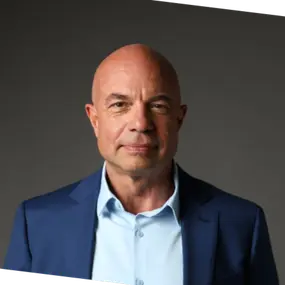
President, CEO & Co-Founder, Palladyne AI
Ben Wolff has served as Palladyne AI’s President & Chief Executive Officer since February 2024 and has served as a member of its board of Directors since September 2021. He has held various leadership roles at the Company throughout the years, including as prior President and Chief Executive Officer and Chairman of Palladyne AI’s Board of Directors. Most recently, Ben served as Executive Chairman from December 2021 until February 2023 and as Executive Vice Chairman from October 2023 until his appointment as Palladyne AI’s Chief Executive Officer effective February 2024.
Prior to joining Palladyne AI, Ben served as Chief Executive Officer, President and Chairman at Pendrell Corporation from December 2009 to November 2014. In April 2004, Ben co-founded Clearwire Corporation, where he served as President and Chief Executive Officer until March 2009 and Co-Chairman until October 2011. Ben previously served on the board of the Cellular Telecommunications Industry Association (CTIA).
Ben earned his law degree from Northwestern School of Law, Lewis & Clark College in Portland, Oregon, and his Bachelor of Science degree from California Polytechnic State University.