YouTube

 Apple Podcasts

 Spotify

 iHeartRadio

 Podcast Addict

 Podchaser

 Deezer

 PlayerFM

 Castbox

 Goodpods

 RSS Feed

 Amazon Music
Why newcleo Chose a SPAC Over an IPO — Stefano Buono

newcleo co-founder and CEO Stefano Buono joins Mike Blankenship to explain why he chose a SPAC over a second IPO, why a U.S. listing was strategic as well as financial, and how newcleo's lead-cooled reactors and recycled nuclear fuel fit the U.S. market.
Key Takeaways
- Stefano Buono took his previous company public through a traditional IPO; for newcleo he chose a SPAC primarily to reach the market faster.
- The U.S. listing was strategic as well as financial: newcleo wanted U.S. ownership and visibility as it builds operations in the American nuclear market.
- newcleo added a U.S. nuclear industry veteran, former TVA CEO Jeff Lyash, as board chairman and strengthened its audit committee for U.S. public-company reporting.
- The end of the long-standing U.S. ban on recycling spent nuclear fuel opened the market for newcleo's model of recycling waste into new fuel for its reactors.
- Buono acknowledges post-merger trading volatility but says the SPAC let newcleo close and advance in a market where some companies chose not to pursue an IPO.
Stefano Buono had already taken one company public through a traditional IPO. For newcleo, he chose a SPAC, and explains why speed and a U.S. shareholder base made the difference.
Stefano Buono, co-founder and CEO of newcleo, joins host Mike Blankenship to discuss newcleo's business combination with NewHold Investment Corp. III and its listing on Nasdaq. A nuclear physicist who previously led Advanced Accelerator Applications through its IPO, he compares the SPAC and IPO routes, explains why a U.S. listing was strategic as well as financial, and walks through newcleo's lead-cooled reactor and recycled-fuel model. They also cover board-building for the U.S. market, audit committee readiness, and closing a de-SPAC in a difficult market.
What We Cover:
- Why newcleo chose a SPAC over a second IPO
- Speed to market and building a U.S. shareholder base
- Closing the business combination with NewHold Investment Corp. III
- Raising billion-dollar-plus capital, private and through the merger
- Lead-cooled reactors and walk-away safety
- Recycling spent nuclear fuel into new fuel
- How the lifted U.S. recycling ban opened the market
- Appointing former TVA CEO Jeff Lyash as board chairman
- Strengthening the audit committee for U.S. reporting
- Post-merger trading and closing a deal in a tough market
Connect with Stefano Buono and newcleo:
Website: newcleo.com
LinkedIn: linkedin.com/company/newcleo
X: x.com/newcleoenergy
Connect with Mike Blankenship:
LinkedIn: linkedin.com/in/mikeblankenship
About Winston Taylor:
Winston Taylor is an international law firm with a capital markets practice that works with companies and sponsors across the SPAC and public-company lifecycle. Learn more at winstontaylor.com.
Interested in joining a future episode? The SPAC Podcast is part of One Iron Network. Reach out at thespacpodcast.com and explore the network at oneironnetwork.com.
Follow The SPAC Podcast:
Website: thespacpodcast.com
LinkedIn: linkedin.com/company/thespacpodcast
YouTube: youtube.com/@thespacpodcast
A One Iron Network production: Executive Producer Joshua Wilson
Disclaimer: Michael J. Blankenship is a licensed attorney and partner at Winston Taylor. Joshua Wilson is a licensed Florida real estate broker and holds FINRA Series 79 and Series 63 licensure. The content of this podcast is for informational and educational purposes only and should not be considered legal, financial, or compliance advice. All views and opinions expressed by the hosts and guests are their own and do not necessarily reflect the policies or positions of any regulatory agency, law firm, organization, or employer. Listeners should consult their own legal counsel, compliance teams, or financial advisors to ensure adherence to applicable regulations, including SEC, FINRA, and other industry-specific requirements. This podcast does not constitute a solicitation or recommendation for any financial products or services.
Let's Connect on LinkedIn:
https://www.linkedin.com/in/mikeblankenship/ https://www.linkedin.com/in/joshuabrucewilson/
To Contact Us, Please Visit:
https://www.TheSPACPodcast.com/contact/
Frequently Asked Questions
Why did newcleo choose a SPAC instead of an IPO?
Stefano Buono says the main reason was speed to market. He had already taken a company public through an IPO, and this time the SPAC route let newcleo reach the public markets faster while building a U.S. shareholder base.
Why did a European nuclear company list on Nasdaq?
Buono sees Nasdaq as the most suitable market for innovative public companies. newcleo also wanted a component of U.S. ownership because it has started operations in the U.S. nuclear sector, so the listing served strategic as well as financial goals.
How did newcleo prepare for U.S. public-company reporting?
newcleo appointed Jeff Lyash, former CEO of the Tennessee Valley Authority and Ontario Power Generation, as board chairman, and reinforced its audit committee with U.S. members so its reporting, prepared under IFRS, aligns as closely as possible with U.S. standards.
What makes newcleo's reactors different?
newcleo is developing fourth-generation reactors cooled by liquid lead, which Buono says supports walk-away safety. The reactors are designed to run on fuel recycled from the spent fuel of existing reactors.
What did Stefano Buono say about trading after the de-SPAC?
He notes that stock prices have historically been volatile after SPAC mergers and that newcleo's sector has been under pressure since the deal was announced. Even so, he believes the SPAC route was the right choice for the company given the market timing.
00:00 - Welcome and Introduction
00:12 - newcleo's Lead-Cooled Reactor and Recycled Fuel
01:44 - Closing the NewHold Deal and Ringing the Bell
02:11 - From an IPO to a SPAC: A Second Nasdaq Listing
02:55 - Why the SPAC Route: Speed and U.S. Ownership
03:47 - Five Years of Building newcleo
05:17 - Licensing in France and the Slovakia Joint Venture
06:26 - Why newcleo Came to the U.S.
07:31 - The End of the U.S. Recycling Ban
10:03 - Building a Board for the U.S. Market
12:37 - Business Model: Reactors, Fuel and Services
16:13 - The Ten-Year Vision and the Italy Demonstrator
20:46 - Lessons from the SPAC Journey
Mike Blankenship:
Mike Blankenship here with The SPAC Podcast. Today I'm joined by Stefano Buono. how are you doing today, Stefano? Why don't you give us a little bit back background about yourself and your company?
Stefano Buono:
Yes, very well, thank you. newcleo is a company that developing a nuclear reactor of the next generation, the fourth generation. They are very peculiar because they are used as a coolant, liquid lead. And this allows the possibility to make very safe reactors. We said that we reach intrinsic safety, namely the walk-away safety. We can go away and the reactor would switch off in any problematic conditions without releasing any radioactivity or even without damaging ourselves. That's the advantage of this coolant. But the second advantage is that you can actually essentially burn the radioactive waste of other reactors, namely, you can recycle the nuclear waste, the spent nuclear fuel of our reactors, of other reactors, and then you can reuse it, create new fuel and reuse it in our reactors. And all that is not another thing, it's just all the technology that is going to be re-industrialized. That's the funny part of it, I say. This is existing technology in Europe since more than 60 years. So it's really has been hanging for years because all of nuclear innovation has been hanging for years. And so we are essentially industrializing all that years.
Mike Blankenship:
Excellent. Well, congratulations on your closing last month. So I understand newcleo closed its its business combination with NewHold Investment Corp. Trading sort of late September. So you also rang the opening bell, which is an exciting moment for for any new company. And I, you know, congratulations on that. What did that moment mean to you and and why is a US listing the right step for new company?
Stefano Buono:
Yeah, actually it's my second time, so I wanted to come back.
Mike Blankenship:
it's gonna be even better.
Stefano Buono:
The first time was an IPO and this time was a SPAC. So essentially both companies were very innovative companies. Also the previous company was in nuclear medicine. and we brought therapeutic drugs to the market into the US for the first time. we brought, and again, that was kind of a European know-how that we brought to US. We think that the Nasdaq market is most suitable market to evolve as a public company if you do innovations. So that's very important. And the first time actually SPAC did not even exist. Well, they did, but they were not very popular yet. It was 2016, so you might have me. Maybe it was not even a moment where SPAC were starting to be used. But this time there was this opportunity and there was this choice. And essentially we chose the SPAC route because we wanted to go faster to the market. We had to be known by US. We wanted to have a component of US ownership into the company because we started to have operations in field of nuclear in US. So we felt we had to be a little bit more of an American company. So this listing was not only for financial reasons but was also for strategic reasons that we did it.
Mike Blankenship:
Well, I understand newcleo has raised over a billion dollars since its founding in in early in 2021. Tell me a little bit more about what you're most proud of having built in those five years and and what does that say about the strength of the team and and your technology?
Stefano Buono:
Yeah, thank you for the question. We have built a big team. We are 900 people in seven countries. So that's pretty unique as a nuclear startup, especially European nuclear startup, because for five years we've been in Europe. And actually we have raised $780 million only as a private company in Europe. So we reached the billion with the PIPE of the merger. In these years we built the companies which also did some acquisitions because we believe it's very important to have a very solid supply chain when you are building nuclear reactors and we wanted to have a vertical integration of the most critical component of our supply chain. So essentially we bought three companies that are generating revenues, not only revenues but also profits. And this was balancing, of course, the big losses that we have with the rest of the company because we are investing a lot. We designed the... the reactor and the fuel factory. We started the licensing process in France. The licensing process was very successful for the MOX factory, for the safety part of the procedure. So we are now entering into a phase in which we seeking for construction permit in France. Same thing for the reactor. We are about to conclude the first part of the safety part. to start to enter into the construction permitting part. We identified land, we made a joint venture with Slovakia, Slovakia with the government actually, so we are in a joint venture to develop a four reactor site in Slovakia. Slovakia is one of the most nuclearized countries in the world. 60 % of the electricity of Slovakia is coming from nuclear power. The only country that has more nuclear power is France, actually. So we evolve in the most nuclearized countries in the world at the moment with respect to the percentage of power produced into the country. And of course, we decided more than one year ago to come to US. Why that? As I explained to you, we are doing two things, recycling the nuclear waste, creating new fuel, and we use fuel in our reactors. That is, for example, the strategy that not only France but also Slovakia has decided to do. And so to do this, we are offering them the possibility to recycle and create new fuel from their waste. But also we want to build four reactors in an existing nuclear reactor site. So it's a country strategy. We didn't come before in US because there was no such strategy in US. You could not recycle nuclear fuel and do nuclear fuel out of the waste. And you couldn't do this in US for 50 years, 50 years, the time of Carter, there was a ban on recycling. But this ban was taken off about one year ago in May for many reasons. Essentially, today there is a huge amount of nuclear waste or spent fuel in the US. And there is some energy has been extracted from this material. But today you can extract 200 times more energy. So in the nuclear material that we extracted from the ground brought to US, there is still 200 times the energy. if we said we close the fuel cycle, so we recycle and reuse this energy. I believe the government has decided finally to exploit this possibility, the possibility of having a mine of power already present in the US in the form of nuclear spent fuel. Somebody said in an article The government is sitting on 100 trillion treasure and is spending 80 billion to bury those treasures underground. The 80 billion refers to the idea of geological repository. So you see the numbers that are on stake. But there are two other things that we understood are very relevant to this change of strategy. The first is nuclear independence, is energy independence. So the fact that you don't rely on material coming from outside of US. And the other is that recycling is getting also interesting from an economical point of view. because the cost of uranium has raised five times since it was very steep a couple of years ago. people are starting to get worried about the cost of a fuel, not only for the existing reactors, especially for the future reactors. Future reactors need enrichments that are very high, processes that are pretty expensive. So today, recycling and reuse become very competitive with respect also to some fuels that are needed for the next generation of small modular reactors that is coming. on the market.
Mike Blankenship:
Well, let's talk about your management board. so you've announced some veteran new board members that will join you know early next year. So how does that leader your leadership team combined with that board experience help strengthen your path to commercial commercialization that you were just talking about, getting the recycling stuff?
Stefano Buono:
Yes, thank you. US is becoming also a very interesting market because of this idea of recycling and there is a huge need of expansion of power. We moved from a installed base power of 100 gigawatts installed to 400 gigawatts in 24 years. So the goal of the government is to quadruple the nuclear production by 2050. So this is a huge challenge and there is a huge market. So we want to address this market. So the first idea was to have a chairman that has such experience and the knowledge of this market. and which was Jeff Lyash, who has been the CEO of the Ontario Power Corporation, but also the CEO and chairman of TVA. So that was one of the most important choice, would say, top and going down to have people who is very well. of the market dynamics in US and can guide us. You have to consider ourselves as a European company with a huge know-how, technical know-how, but not a huge knowledge of course of the American market. So we need American managers that are capable of guiding us into the immense possibility of this market in US. And then we also reinforced our audit committee. Again, we are reporting at a different pace. Our numbers, we needed more control and more people working on the level of... financial report and the audit committee so that was also the enforcement we did with American people so that the reporting even if you are reporting in IFRS can you know approach the American standard as much as we can.
Mike Blankenship:
And so I appreciate that. So from a business model, let's talk about that too. So newcleo plans to sell licenses for its reactor IP and supply those reactors with recycled fuel from its own facilities. Can you walk us through how, the reactor fuel revenue streams, how that including third party licensing and services reinforces each other for your business?
Stefano Buono:
Yes, not only we offer a license of our reactor, but we can be the EPC contractor of a client for our reactor. And what we do, we also do the most critical component ourselves. So we built, for example, the steam generator, not only the fuel, but also the vessel. We built the pumps, the nuclear primary pumps, secondary pumps. We have a lot of components that we built ourselves, control bars, shutdown bars. All we built with parts. And this is part of our strong strategy on supply chain. So we can support the construction of the reactor, but also of course we want to provide the components. And then think about who is the final user of this reactor. Not necessarily is a unit as the know-how on how to operate the reactor. be a data center, could be an industry who needs electricity and heat at the same time and they don't want to operate a reactor. So we can be also the operator of So you have these revenue streams during construction until... arriving to the initial operation of the reactor. And then you have long-term activity, which is maintenance, spare parts and the replacement of components that we produce ourselves, but also potentially operate the reactor for the client and of course the fuel, which is a very big important revenue streams. A life of a reactor is six years. So potentially the revenues coming from the long-term operation are much bigger than any licensing agreements that you have at the beginning. In some cases we also may own a part of the facility. This is today the case for the Slovakian deal. We have a joint venture, the government owns 51%, we own 49%. This situation will stay the same until the investment decision, the final investment decision, and this is where the final project finance will be concluded. So we might get diluted into this... into this phase and keep only a small percentage. So I would say we have a big flexibility in how to have a partnership to deploy our fleet. We tend not to have capital investments, but if it comes and it's profitable and we have the possibility to do it, we could do it. At the beginning, of course, has been maybe more needed to be part of the risk also in the deployment of the reactor. We hope that later on we will have more of product that we sell for others to operate.
Mike Blankenship:
That's terrific. So just looking ahead, down the your vision ten years from now, what what does success look for for you all at newcleo and and back to this recording, what would you what would you say?
Stefano Buono:
Well, first, one of the reasons why we... want to be in the stock market. We wanted to be in the stock market since the company was incorporated in 2021. So there's been always a strategy. one of the reasons is essentially because we want to be there to stay. So we are not seeking to exit from the business to be acquired by a bigger company. So essentially, we want to grow. We want to grow because we have many innovations to do. business model, this closure of the fuel cycle is very important for many countries. And many countries are willing to do this. The safety of our reactors and hopefully also the cost of our reactors will be attractive to new customers. So we really want to be a successful company and growth. In 10 years from now, we hope to have a few reactors already operational and of course the fuel factory. We are planning to have a fuel factory fully operational by 2031 in US and our first commercial reactor by 2032. This is very achievable because indeed we are already building an industrial facility in Italy. This is a non-nuclear facility, but has the complexity of a nuclear reactor. Power is only 10 megawatt electric, while a bigger reactor is going to have 200 megawatt electric. But all of the components and even the balance of plant and the power generation is there. And why we are building this facility? Because... We want to have an industrial experience. We want to the time to qualify all of our component, procedures, instrumentation, everything you need in the reactor. We want to qualify in advance of building and operating the new reactor so that when we will build our first machine, can be a commercial size machine. So we have built a number of systems to make the qualification of our components and materials and choices in Italy. And we've increasing complexity. These are 16 different systems. The last one is a complete reactor. So we have three steam generators, three pumps, a core simulator, electrical core. simulator given the heat, a big lead tank because our configuration is a pool configuration, we have the balance of plant and the energy production. So we spent 10 megawatts of electricity and we inject only 3 megawatts into the system. This is going to be completed by the end of this year and we will then start operating this facility by the middle of next year. So we will be qualifying and... facility during the first months of the year but we have other facilities that are already operational again very powerful very very complex because we have been also qualifying our components separately so it's a it's a very different approach from again from any other company to have such a huge deployment we invested in this facility 110 million euros So it's only in the construction and it's something that we did and we built using only our nuclear group companies as the EPC contractor. So it's also a demonstration that we can do this kind of installation on time and on budget. The time it took to build this facility is going to be around one year. So we're going to finish by the end of the year the construction phase and this took one year from the green field that was an existing building to refit at that time.
Mike Blankenship:
Well terrific. Stefano, I I appreciate you coming on. you know, I know it's a long five year journey and getting through the SPAC deal was I'm sure was an interesting one for you. but now you're you're
Stefano Buono:
Very intense.
Mike Blankenship:
yeah, and now you're public and so go for it. I don't know there's anything else you wanna tell the audience here about, you know, going through that journey with the SPAC. You know, how how
Stefano Buono:
That has been, I would say, a good experience for me. Of course, you can debate if the shareholder base is adapted to be a public company if you go through the SPAC route rather than the IPO route. There is always historically lot of instability in the... price of the stock after the merger and we are also experiencing this but potentially not necessary for the mechanism of the SPAC but also because our market unfortunately has been very suffering since we announced the deal to Until now our peers group has lost potentially 50 % or more. So it's really not been the best moment, but at least we could close and we could advance. had a PIPE supporting our need in cash, hopefully. And we could close the deal even in this complex market condition, which some other companies renounce to do an IPO. So at the end, for the company benefits was good to have chosen SPAC rather than an IPO for this particular timing that we had. Now it's time for people to understand the potential of our company in the market.
Mike Blankenship:
That's terrific. it's you're doing something great for humanity and and the world there, certainly recycling, something that lasts forever, essentially. but I again I appreciate you coming on, talking a little bit about your newcleo and the business and the success through the SPAC. I really think it's great and I you know, all the success in the world for you. So thanks again.
Stefano Buono:
Thank you very much.
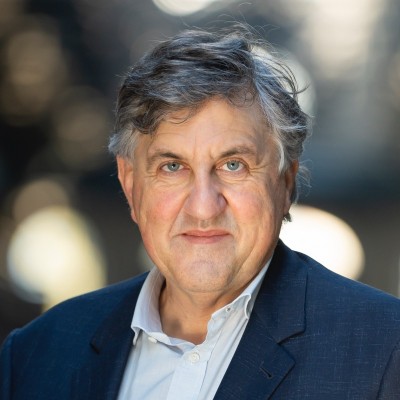
Co-Founder and CEO
Stefano Buono has served as Co-Founder, Chief Executive Officer and former President of newcleo since March 2021. Mr. Buono is a nuclear physicist and entrepreneur. Prior to cofounding newcleo, he founded Advanced Accelerator Applications S.A. (‘‘AAA’’) in 2002 and served as its Chief Executive Officer and President until January 2018.AAAbegan trading on the Nasdaq Global Select Market in November 2015 and was acquired by Novartis AG in January 2018 in a transaction valued at approximately $3.9 billion. From January 2018 to January 2021, Mr. Buono served as an advisor to AAA. Earlier in his career, Mr. Buono worked for approximately 10 years with Nobel laureate Carlo Rubbia at the European Organization for Nuclear Research (CERN) and CRS4—the Center for Advanced Studies, Research and Development in Sardinia. Mr. Buono also currently serves as Chairman of Planet Smart City and LIFTT S.p.A., as Chairman of the board of Trained Therapeutix Discovery, and as a member of the supervisory board of Gauss Fusion. He previously served as an independent director of Abeona Therapeutics Inc. from May 2018 to September 2020. Mr. Buono received a master’s degree in physics from the University of Turin.