

 YouTube
 Apple Podcasts
 Spotify
 iHeartRadio
 Podcast Addict
 Podchaser
 Deezer
 PlayerFM
 Castbox
 Goodpods
 RSS Feed
 Amazon Music
 Deals Close on the Auditor's Calendar: SPAC Audit Readiness - Drew Bernstein
Drew Bernstein, Co-Chairman and Co-CEO of MarcumAsia, joins host Mike Blankenship to explain why SPAC audit readiness and target quality have become the real bottleneck, and why deals close on the auditor's calendar, not the press release.
Key Takeaways
- The SPAC bottleneck has shifted from the trust account to the target: audit readiness and company quality are now the scarce resources.
- The press release sets an aspirational closing date; the audit sets the real one.
- Deal timelines built backward from a SPAC's liquidation date rarely hold.
- Drew frames an IPO as an auction and a SPAC merger as a negotiation the company controls.
- Auditor choice matters, especially for cross-border and emerging-market deals.
- Closing is the wedding; the first 90 days as a public company are the marriage.
- With Nasdaq exercising more discretion, the market is shifting toward quality over quantity, and Asia's SPAC pipeline now reaches well beyond China.
"Deals close on an auditor's calendar." The press release sets the aspirational date. The audit sets the real one. And today's SPAC bottleneck isn't the trust account; it's the target.
Host Michael Blankenship sits down with Drew Bernstein, Co-Chairman and Co-CEO of MarcumAsia and co-founder of MBP Global, for a cross-border auditor's view of today's SPAC market. Drew explains why audit readiness and company quality are now the scarce resources, the red flags that signal a deal is headed for trouble, and why a timeline built backward from a liquidation date rarely holds. He also covers what makes an Asian company a strong SPAC candidate and why Asia's pipeline now reaches well beyond China.
What We Cover:
- Why the SPAC bottleneck has moved from the trust account to the target
- IPO vs. SPAC: an auction vs. a negotiation you control
- What makes an Asian company a strong SPAC merger candidate
- Auditor red flags in SPAC and de-SPAC transactions
- Why deals close on the auditor's calendar, not the press release
- How to choose a SPAC auditor for emerging-market deals
- The first 90 days after closing: the wedding vs. the marriage
- Nasdaq discretion and the market's shift to quality over quantity
- Asia's growing SPAC pipeline beyond China
Connect with Drew Bernstein
Website: marcumasia.com
LinkedIn: linkedin.com/in/drew-bernstein
Connect with Mike Blankenship
LinkedIn: linkedin.com/in/mikeblankenship
About Winston Taylor
Winston Taylor is an international law firm with a capital markets practice that works with companies and sponsors across the SPAC and public-company lifecycle. Learn more at winstontaylor.com.
Interested in joining a future episode? The SPAC Podcast connects sponsors, management teams, bankers, and capital markets counsel. Learn more at thespacpodcast.com and oneironnetwork.com.
Follow The SPAC Podcast
Website: thespacpodcast.com
LinkedIn: linkedin.com/company/thespacpodcast
YouTube: youtube.com/@thespacpodcast
A One Iron Network production: Executive Producer Joshua Wilson
Disclaimer: Michael J. Blankenship is a licensed attorney and partner at Winston Taylor. Joshua Wilson is a licensed Florida real estate broker and holds FINRA Series 79 and Series 63 licensure. The content of this podcast is for informational and educational purposes only and should not be considered legal, financial, or compliance advice. All views and opinions expressed by the hosts and guests are their own and do not necessarily reflect the policies or positions of any regulatory agency, law firm, organization, or employer. Listeners should consult their own legal counsel, compliance teams, or financial advisors to ensure adherence to applicable regulations, including SEC, FINRA, and other industry-specific requirements. This podcast does not constitute a solicitation or recommendation for any financial products or services.
Let's Connect on LinkedIn:
https://www.linkedin.com/in/mikeblankenship/ https://www.linkedin.com/in/joshuabrucewilson/
To Contact Us, Please Visit:
https://www.TheSPACPodcast.com/contact/
Frequently Asked Questions
What does it mean that SPAC deals close on the auditor's calendar?
Drew Bernstein's point is that the announced closing date is aspirational. The real timeline is set by how long it takes to complete a PCAOB-standard audit of the target company, so audit readiness ultimately determines when a de-SPAC can close.
Why has the SPAC bottleneck moved from the trust account to the target?
In Drew's view, capital in the trust is no longer the scarce resource. The constraint today is finding target companies that are high quality and audit-ready enough to complete a U.S. public listing.
How does a SPAC merger differ from a traditional IPO?
Drew describes a traditional IPO as an auction, with pricing set by the market at the time of the offering, while a SPAC merger is a negotiation in which the company has more control over the terms.
What happens after a SPAC merger closes?
Drew compares closing to the wedding and life as a public company to the marriage. The first 90 days after closing test whether the company is ready for public-company reporting and investor expectations.
Who is Drew Bernstein?
Drew Bernstein is Co-Chairman and Co-CEO of MarcumAsia and co-founder of MBP Global. MarcumAsia is an active independent auditor for cross-border IPOs and SPAC mergers, with offices in New York, mainland China, Hong Kong, Singapore, and Japan.
00:00 - Welcome: Drew Bernstein of MarcumAsia
00:36 - SPAC Cycles: From Blank Checks to 2026
02:02 - A More Disciplined Market and the New Bottleneck
03:22 - IPO vs. SPAC: Auction vs. Negotiation
05:12 - What Makes a Strong Asian SPAC Candidate
07:34 - An Auditor's Red Flags in SPACs and de-SPACs
09:48 - How to Choose a SPAC Auditor
11:14 - Why Deals Close on the Auditor's Calendar
12:51 - The First 90 Days After Closing
14:41 - Quality Over Quantity: Nasdaq and SEC Changes
15:42 - Advice for Asian CEOs Eyeing a US Listing
18:59 - Asia's SPAC Pipeline Beyond China
Mike Blankenship:
So Mike Blankenship here with The SPAC Podcast. Today I'm joined by with Drew Bernstein from Marcum Asia. Drew, why don't you tell us a little bit about yourself?
Drew Bernstein:
My name is Drew Bernstein. I'm co-managing partner of Marcum Asia. And Marcum Asia, we're a cross-border accounting and advisory firm with offices throughout China and Asia, Singapore, Tokyo, and we have our sister company, MBP Global, that does all of the work outside of China, including the United States, Europe, South America.
Mike Blankenship:
Terrific. Well, I know Drew, you've been on a lot of different SPACs. And so I wanna ask you, so you've seen a lot of SPAC cycles over the years and you know, what do you see different about the market here in twenty twenty six versus, you know, the twenty twenty, twenty twenty one boom?
Drew Bernstein:
Well, when you talk about cycles, I go back actually to the original, you know, the starting point. Yeah, the nineties, the early nineties. And the interesting thing about then was if you rem if you recall, a SPAC was known as a blank check company. Remember?
Mike Blankenship:
That's right. That's right. Change the rules a little bit.
Drew Bernstein:
But do you remember what it was before that?
Mike Blankenship:
Well no.
Drew Bernstein:
It's called a poor man's IPO. And that's one of the it's one of the most attractive things about a SPAC, right? It lets the average person have a piece of an IPO, which never was before. And for me and and for me, the guys that did it back then, even though they didn't have great returns, they were actually trailblazers because they were looking for these deals that were too small for the institutional investors to look at. You know, they had quirky deals and stuff, but they were looking for deals that had, you know, positive EBITDA. Now, when you talk about cycles today, you know, the reference point is 2020-21. And back then you had a hundred six hundred and thirteen SPACs, they raised $162 billion. And you're gonna compare it to today, which is a much more disciplined approach, I think, than took place back in 20, you know, 2021. right now. In twenty six there's a hundred and fifty-two SPACs. They raised about thirty billion, just under thirty billion. And compared to two thousand and twenty-five, it's up, it's a hundred and what is it, a hundred and fifty two deals versus one hundred-four. So we're slightly up. And I think the bottleneck has now moved from the trust account to the target, if you know what I mean. historically you saw like ninety-five percent redemptions and today money's plentiful. And you know, the audit re the audit readiness and the quality of the company, I think that's the scarce part.
Mike Blankenship:
And and so, you know, when you have a company considering a US listing and and you're right, I'm I I totally agree with you, but how do you explain that difference between that traditional IPO and and the and the SPAC merger?
Drew Bernstein:
Well, there's a lot of differences between them, but the major ones when you talk about an IPO and a SPAC, there's a few things that really stand out. the first, in a SPAC you're guaranteed to be public at the end of the process, like a reverse merger. Typically much quicker. And three, generally cheaper. I mean, but there's some other big differences. You know, when you look at it from thirty thousand feet, an IPO is an auction. Right? A SPAC, that's a negotiation that you control. That's a big difference. And you're trading basically in a SPAC and an IPO, you're trading what I would consider redemption risk for the trust, the tra the cash. Right? Because the cash is not yours until they vote. So they're both subject to the same SEC review process. and the SEC doesn't give you a grade, you know, on a curve because you just s came through came through a side door. So I you know for me those would be the major differences.
Mike Blankenship:
Yeah, and then let's talk about geography and and and Asia. You've worked more than twenty five years with Asian issuers. what makes one that's strong or weak candidate for a a SPAC merger?
Drew Bernstein:
You mean particularly for an Asian company?
Mike Blankenship:
correct. Yeah.
Drew Bernstein:
Mm, three things. One, real revenue. Two clean books. And three, a CFO that can speak English. I always tell companies you want to be a successful public company regardless of how you get public. and I wonder if you agree with me, but at the end of the day, you better own eighty percent of your investors' trust and confidence. And that has everything to do with communication and transparency. So you know, a strong deal is where you have clear ownership. the related party, you know, is limited. And you're able to communicate your story to the local people, right? If it's US investors, European investors, but you can you can convey your story. And even better. because you're a private company and now you're becoming a public company when you think like a public company, right? You have a board of directors, you have reliable forecasts, right? and you have to have systems that are now global systems, not local systems. So I think those are some of the challenges that the Asian companies have in specifics. as compared to possibly, you know, some of the US companies or Asian companies that go. You know, Those are the things that I would actually concentrate on for them.
Mike Blankenship:
Well, I think, you know, it's very good on least on the Asia side, but what about from an auditor perspective? What what is kind of your first tell that a SPAC or even a a de-SPAC is you know, running into some trouble?
Drew Bernstein:
Wow. That's an intro you know, That's a great, when do I know it's getting in trouble? Usually usually when I'm heading to the meeting and sometimes even in the parking lot. You know, it's a it's a it's interesting when you say that. the red flags to those deals are are so easy to see because usually you go into a meeting and they've already set the closing date and they haven't even started the audit yet. And there's most of the things you can control when you're doing a trans like transaction like that. But one of the things that you can't control timing wise is the audit. And that's the first thing that really should be done. And I'm sure you'd agree with me that when you're when you're speaking, you know, to investment bankers or funds, they're really not going to spend much time with you until you actually show them an audit, because they don't actually know what they're investing in until they see it. You know, other red flags, they can't produce a balance sheet. they don't have clear revenue recognition policies. management's surprised at how long the audit's gonna take. you know, when the audit timel when the audit the timeline is built backward, you know, from a liquidation date, rather than say a realistic timeline. the deal is often headed for the rocks.
Mike Blankenship:
Yeah, I certainly see that, but like you mentioned about audit and timing and Let me ask you, so when you have a sponsor target actually looking for when choosing the SPAC auditor, when when should they do that?
Drew Bernstein:
Say that again?
Mike Blankenship:
When when what should tar sponsors and targets actually look for when they're choosing a SPAC auditor like yourself?
Drew Bernstein:
Well, th they have to especially when you're looking in what I would call markets, right? you want to look for somebody that has experience in that That's why at my firm we have two firms, Marcum Asia, which does all of the Asia work, and we have MBP Global, which does all of the non-Asia work. because companies in Asia They want to know that they're working with a firm that has experience, that has people on the ground, that has knowledge of local business and regulatory environment and government regulations. and I kind of it's sort of like sort of like choosing a surgeon, right? You look at how many operations they've done, and then you look at how many are left standing. So you want to choose somebody that has experience.
Mike Blankenship:
I I agree with you. I think that's a a great point. Now, let's talk about sort of the de-SPAC timing and and so once the de-SPAC's announced, w what determines whether that transaction closes on schedule in your mind?
Drew Bernstein:
deals deals close on an auditor's calendar. Press release is just the aspirational date. financial statements they have expiration dates and you know, you miss a date and they become stale. So Every week of delay cost extension payments, sponsor patience and investor confidence. And the last one's the most expensive. So you have redemptions also and minimum cash conditions. You want in to do a PIPE deal today, I mean to do a SPAC deal today, I would say it's almost impossible with what out with what we consider without we consider to be the PIPE money. And the PIPE money is the institutional money. And that's what gives the investors confidence. That the deal is real and will close.
Mike Blankenship:
Well, let's talk about closing. So when a company you know, what do companies underestimate in that first days after the closing happens?
Drew Bernstein:
Huh. You mean the first ninety days?
Mike Blankenship:
Yeah, that first quarter com you know, they closed the de-SPAC. What what are they underestimating?'Cause that's when the real work becomes their public company.
Drew Bernstein:
Yeah, I tell all the chair people and close the you better enjoy the closing dinner because that's the last free meal. And you know, everybody thinks that, you know, when you do a de-SPAC or the IPO is done, that's the end. But the truth is it's really kind of the beginning. And if I was to explain it from 30,000 feet where everybody can understand it in plain English, right? The listing is sort of the wedding. The next ninety days, that's the marriage. And the SEC, that's your mother in law. Does that kind of sum it up?
Mike Blankenship:
It it sums it up. I get it. That's that's an interesting analogy to to family life. I get it.
Drew Bernstein:
I can get into, you know, look, there's a lot of I can get into the details, but that's, you know, on day one, you're a public company, you know, with a finance team of a private company. So you can imagine the hurdles that you have to get over.
Mike Blankenship:
Yeah, I mean preparation's the key there and I think that's, you know, one of the the key things that early on they need to set that expectation. So
Drew Bernstein:
Well, I think one of the things that we've seen in the market today is the market has clearly moved away from quantity and is focusing on quality. The S the SEC and Nasdaq has changed a lot of the rules in the last year. and probably one of the most significant ones is the fact that Nasdaq now has this discretionary power, right? In order to approve or disapprove deals. And even though the minimums may be f well, the minimums are fifteen and twenty-five, but even if you're doing the minimums, I think it's unlikely that you'll get a deal done. The number's probably in the mid thirties, thirty-five million, you know, to get a deal approved today. So as I said, the deals are clearly moving away from quantity and into quality.
Mike Blankenship:
Yeah. And if and if you were to talk to an Asian CEO that's listening, considering a US listening today, what's the one thing you'd tell them to do and think about between an traditional IPO and a and a SPAC transaction?
Drew Bernstein:
Well, either. You know, there's many ways to go public, IPO, direct, SPAC transaction. but the first thing I tell them is to get audit ready. Because under either, you're not going to get very far without the audit. you have to be ready for them, you know, to be ready to meet the requirements that you're not typically there to. We tell companies we work with to begin with to use internal consultants because there's many differences between local accounting rules and GAAP, IFRS. Those are some of the hurdles that companies, you know, typically get involved in. And having an internal consultant, they actually help you identify all the problems. before you get expensive lawyers and accountants involved. And particularly for Asian companies having a really good CFO, that can bring an enormous amount of credibility to the company because an Asian company in a US company, the CFO is probably the first guy hired, first person hired. In an Asian company, that's probably the last person hired.
Mike Blankenship:
Totally totally understand that. Well, Drew, I appreciate you coming on. Is there anything you wanna add, you know, kinda to the to the audience here that may be listening about maybe yourself or any other kind of transactions you might see in the in the future?
Drew Bernstein:
Well, I think it's an exciting market. And the SPAC market now is a particularly interesting market, especially if you're a good company out there. The SPAC market's a different pool of money, right? IPO money has to be raised. The SPAC money is all sitting there. And there's about you can imagine over 200 SPACs. There's been about 34 transactions, there's about 70 in the works. So if you just see the math. There's a bunch of money out there right now and SPACs are on a timeline. So you can imagine with all that money out there still, if you're a good company where you have revenue and you have a good business plan and cash reserves, you can imagine that the competition for you as a target is going to be fierce. So I think there's an enormous opportunity out there right now for good companies. in the SPAC market.
Mike Blankenship:
Yeah, I think, you know, well we've had a lot of guests on the show and and I think they generally the sentiment's the same thing. We have a lot out there, but it's good for to hear the reassurance out of Asia and all the great stuff you you're doing and Marcum Asia.
Drew Bernstein:
I think perhaps for the next ten years, I think, and I've said this many times before. The majority, I think, not all, but the majority of what I consider to be the industry disruptive unicorns and all the M&A that leads up to that is going to be taking place from Asia. You know, we haven't, for instance, we haven't seen a company from Korea in some time. And then you see a company like SK that's the largest foreign IPO raising over 26 billion, larger than Alibaba.
Mike Blankenship:
Amazing. I and it I I I it certainly is. There is this pent up demand in in in Asia. I go to Japan, I go to Korea.
Drew Bernstein:
Yeah. And I think the other point that I'd raise is perhaps ten years ago when we talked about Asia economically, we were talking about China. Period. But today and in my business, probably back then, ninety five percent of my work was in China. But that's not so today. More than half of our business in Asia right now is coming from places like Singapore. Malaysia, Indonesia, Vietnam, a lot from Japan now, Korea. It's not just China anymore.
Mike Blankenship:
I agree. And it's totally is what we're seeing as well. And I've been to every single countries in the last few years. So Yeah, and look, I think there's a lot of potential transactions in the future and I'm certain we'll see you on many of those. So I I appreciate you coming on here, Drew.
Drew Bernstein:
my apologies for the technical problems, and thank you so much for having me today.
Mike Blankenship:
Pleasure. Well, this is Mike, with SPAC Podcast.
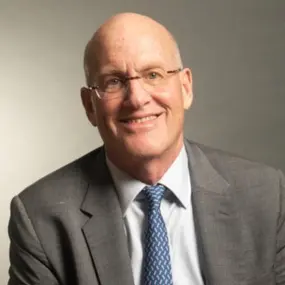
Co-Chairman & Co-CEO, MarcumAsia
Drew Bernstein is Co-Chairman and Co-CEO of MarcumAsia and co-founder of MBP Global LLP. He co-founded Bernstein & Pinchuk in 1983 — among the first PCAOB-registered accounting firms to specialize in SEC audit and advisory services for companies operating across international markets. That practice grew into MarcumAsia, today one of the largest middle-market accounting firms serving Asia-based, U.S. publicly traded companies and the most active independent auditor for cross-border IPOs and SPAC mergers.
Bernstein brings deep expertise across the U.S. and Asian financial ecosystems, with experience extending to Europe and Africa. His industry experience encompasses technology, education, retail, manufacturing, hospitality, pharmaceutical, and real estate. He directs a global team of PCAOB and SEC accounting experts and financial consultants across offices in New York City, mainland China, Hong Kong, Singapore, and Japan.
Bernstein is widely recognized as a capital markets thought leader and commentator. He has published for Forbes, CFO.com, and China Daily and is a regular resource to Bloomberg TV, CNBC, Reuters, the Financial Times, Barron’s, and MarketWatch on Chinese IPOs, cross-border governance, SEC regulations, and investment trends.