YouTube

 Apple Podcasts

 Spotify

 iHeartRadio

 Podcast Addict

 Podchaser

 Deezer

 PlayerFM

 Castbox

 Goodpods

 RSS Feed

 Amazon Music
Why Deep Tech Fits the SPAC Path Better Than an IPO — Dan Nash
Dan Nash, Chairman and CEO of Silicon Valley Acquisition Corp., joins Mike Blankenship to explain why complex deep tech stories can fit the SPAC path better than a traditional IPO, how tying underwriter fees to capital delivered fixes misaligned incentives, and what founders should ask before going public.
Key Takeaways
- Dan Nash sees the SPAC as a more flexible path to going public than a traditional IPO, and says what makes a SPAC work is the same thing that makes an IPO work: pricing the company the right way.
- Because a SPAC deal is priced and structured up front, months before the de-SPAC closes, market moves and competitive bidding among sponsors can leave deals mispriced.
- At Cohen & Company Capital Markets, Dan pushed to pay advisors for capital actually delivered at the end of a transaction, to align banks, sponsors and companies.
- Silicon Valley Acquisition Corp. sources deals through a network of partner firms, including venture firms and boutique banks, rather than relying on a single sponsor's pipeline.
- Dan argues complex deep tech stories, such as post-quantum security, benefit from the longer marketing window a SPAC allows, and that sponsors must plan for redemption risk by pricing appropriately and securing a path to full funding.
Some companies need months, not a one-week roadshow, before the market understands them. Dan Nash explains why complex deep tech stories can fit the SPAC path better than a traditional IPO.
Dan Nash, Chairman and CEO of Silicon Valley Acquisition Corp. (Nasdaq: SVAQ), joins host Mike Blankenship to share what two decades in capital markets taught him about when SPACs work. Dan worked on the Facebook, LinkedIn and Carvana IPOs, co-founded Cohen & Company Capital Markets and led its investment banking business before launching his own sponsor. He explains why pricing discipline decides de-SPAC outcomes, how tying underwriter fees to capital delivered fixes misaligned incentives, how a partner-network model sources deals, and why post-quantum security is a story that fits the SPAC process.
What We Cover:
- Why some SPACs work and others don't
- Pricing a deal up front vs. IPO price discovery
- Paying underwriters for capital actually delivered
- Why sponsor and target alignment broke down in 2020–2021
- Building a relationship-driven sponsor pipeline
- Why deep tech needs a longer marketing window
- Post-quantum security and the SPAC model
- What separated deep tech winners from wipeouts
- Redemptions, trust risk and financing certainty
- SPAC vs. IPO: the first question for founders
Connect with Dan Nash
Website: svacquisitioncorp.com
LinkedIn: linkedin.com/in/danielnash
Connect with Mike Blankenship
LinkedIn: linkedin.com/in/mikeblankenship
About Winston Taylor
Winston Taylor is an international law firm with a capital markets practice that works with companies and sponsors across the SPAC and public-company lifecycle. Learn more at winstontaylor.com.
Interested in joining a future episode?
The SPAC Podcast is part of One Iron Network. Reach out at thespacpodcast.com or explore the network at oneironnetwork.com.
Follow The SPAC Podcast
Website: thespacpodcast.com
LinkedIn: linkedin.com/company/thespacpodcast
YouTube: youtube.com/@thespacpodcast
A One Iron Network production: Executive Producer Joshua Wilson
Disclaimer: Michael J. Blankenship is a licensed attorney and partner at Winston Taylor. Joshua Wilson is a licensed Florida real estate broker and holds FINRA Series 79 and Series 63 licensure. The content of this podcast is for informational and educational purposes only and should not be considered legal, financial, or compliance advice. All views and opinions expressed by the hosts and guests are their own and do not necessarily reflect the policies or positions of any regulatory agency, law firm, organization, or employer. Listeners should consult their own legal counsel, compliance teams, or financial advisors to ensure adherence to applicable regulations, including SEC, FINRA, and other industry-specific requirements. This podcast does not constitute a solicitation or recommendation for any financial products or services.
Let's Connect on LinkedIn:
https://www.linkedin.com/in/mikeblankenship/ https://www.linkedin.com/in/joshuabrucewilson/
To Contact Us, Please Visit:
https://www.TheSPACPodcast.com/contact/
Frequently Asked Questions
Is a SPAC or an IPO better for going public?
Dan Nash says the first question is what the company is trying to accomplish: the amount of capital, and the reasons for being public, whether liquidity, valuation, timing or strategic relationships. A traditional IPO creates buzz and raises capital, while a SPAC offers more flexibility in capital raising and fits companies with more complex stories.
Why do some SPACs work and others don't?
According to Dan, a great SPAC transaction comes down to pricing the company the right way and navigating the path to going public the right way. Deals priced too aggressively up front, or built around capital that never materialized, struggled.
Why does deep tech fit the SPAC model?
Deep tech companies have complex stories that take time to explain: the technology, the commercialization, the team and the economic model. Dan says the SPAC process allows time to structure the deal and then market that narrative to investors, rather than relying on a one-week IPO roadshow.
How should SPAC underwriter fees be structured?
Dan says the obvious alignment is to pay for capital raised. At Cohen & Company Capital Markets, he set the expectation that advisors are paid for capital delivered at the end of the transaction, rather than collecting fees for capital that was never raised.
How should sponsors handle SPAC redemptions?
Dan says sponsors either have to price companies appropriately to protect the trust or make sure there is a path to funding regardless. Because deals are priced months before the de-SPAC, he advises against counting on the trust and stresses having a clear path to the capital the business needs.
00:00 - Introducing Dan Nash and Silicon Valley Acquisition Corp.
00:59 - Why Some SPACs Work and Others Don't
02:19 - Underwriter Economics and Paying for Capital Delivered
05:55 - How a Sponsor Finds the Right Deal
07:27 - Building a Partner-Driven Deal Pipeline
09:39 - Why Deep Tech Fits the SPAC Model
11:29 - Quantum Security and Compressing Timelines
13:16 - What Deep Tech Winners Had in Common
15:05 - Redemptions and Financing Certainty
16:34 - Pricing Risk and Why You Can't Count on the Trust
18:00 - SPAC or IPO: The First Question for Founders
19:32 - Wrap-Up
Mike Blankenship:
Mike Blankenship here with The SPAC Podcast. I'm joined by Dan Nash. Dan, how are you doing today? Why don't you give us a little bit of background about yourself?
Dan Nash:
Great to be here, Mike. I'm Dan Nash, CEO and Chairman of Silicon Valley Acquisition Corp. My background — longtime operator, investment banker, SPAC sponsor and advisor. I sit out in Silicon Valley, hence the name. I worked at a couple of bulge-bracket banks, including Bank of America, and then ran Internet Investment Banking at Wells Fargo Securities for a number of years. I worked on a bunch of interesting transactions, both traditional IPOs and a couple of SPAC deals. I left to co-found Cohen& Company Capital Markets in 2021, which became one of the most prolific SPAC advisors in the ecosystem, and advised on 55 de-SPACs there as Head of Investment Banking. Last year I left to start my own SPAC sponsor. In between, I've had some experience as an operator and a CFO as well.
Mike Blankenship:
Great. So Dan, you went from the Facebook, LinkedIn and Carvana IPOs to building the SPAC practice at Cohen, which I understand did more than 113 transactions — very impressive. What did that vantage point teach you about why some SPACs work and others don't?
Dan Nash:
I think there's some confusion about the SPAC product, but ultimately it's a path to going public. It's more flexible than a traditional IPO. What makes a great SPAC transaction is pricing a company the right way and navigating the path to going public the right way, and that's not so different from a traditional IPO. The difference is that most SPAC situations have a more flexible process for going public, so you see a lot of more complex stories, and you see more flexibility in the type of capital raising you can do to go public. But ultimately you're taking great companies that have a long-term trajectory and are ready for the public market. So it's not so different, but you're usually working with more differentiated stories, or more complex situations, that can create great long-term public companies.
Mike Blankenship:
At Cohen, I understand you pushed two structural changes in the SPAC world — tying underwriter economics to actual capital raised, and cashless extensions. What problems were you trying to solve, and what in the SPAC model still needs fixing?
Dan Nash:
SPACs have been around for a while, but there was a pretty dramatic boom-bust cycle in 2020 and 2021. Having been part of many transactions, I'd point out that you're pricing and structuring a SPAC deal at the front end of the process, as opposed to a traditional IPO, where the roadshow comes at the end and price discovery is really driven by investors during the roadshow. Bankers obviously have a good sense of where that's going to price. With a SPAC, because you're structuring up front, you're picking a valuation, and you have a lot of dynamics in play. One, you have a lag between pricing a deal and the de-SPAC close, roughly four, six, eight months later, and the market can move on you. Two, you often have a competitive process with many SPACs bidding, so you do see some mispriced deals. Specifically in 2020 and 2021, you saw a lot of deals anticipating a large trust and a lot of capital being raised. That created a circular effect where the company planned its business model around a lot of capital, and when that capital wasn't there, you saw a lot of negative performance. As for the changes in the SPAC structure a lot of times the market moved and you didn't have as much capital as expected, specifically in the trust. You might have a $200 million vehicle and $9 million of deferred fees for the bankers. So you regularly had a battle between the companies and the advisors, and a lot of frustration. That was one of the real negative perceptions of SPACs you didn't have alignment between the SPAC sponsor and the company. The obvious alignment is that you raise capital and you pay folks for raising capital. With a SPAC sponsor there's already a dilutive element in the sponsor shares, so companies really struggled to accept paying for the sponsor shares in addition to a fee for capital that wasn't raised. You saw a lot of battles. Some advisors behaved well, but a lot of investment banks behaved badly and held up deals. So we decided at Cohen & Company Capital Markets that we should fix that dynamic and set the expectation that you pay for capital delivered at the end of the transaction, which is a pretty straightforward alignment. I think SPACs in general are doing a better job today, but there are still some banks that ask to get paid on the back end, and there will still be some evolution in the structure. I'd highlight that one of the better attributes of a SPAC is that it's a flexible structure. It's not structured as rigidly as an IPO, so you can adjust economics, adjust terms and fit the product to the situation.
Mike Blankenship:
I appreciate that, Dan. Speaking of relationships and alignment, that's a perfect segue to Silicon Valley Acquisition Corp. My understanding is it's a relationship-driven platform with partners and advisors who bring their own pipelines. So how does a sponsor actually find a company like EigenQ, and what makes it the right deal for that platform?
Dan Nash:
There are a couple of parts there. I'll start with how many SPACs work, and then how we differentiate ourselves at Silicon Valley Acquisition Corp. A lot of SPAC sponsors are investors or advisors with a track record or a pipeline to source a deal. One of the hardest parts of being a SPAC sponsor is finding a good company that will be a successful public company and is appropriate for the SPAC product. So it's sourcing the deal, structuring it correctly, and adding enough value to justify the economics the company is paying. Those are all things you need. When I was on the investment banking side and we did a lot of SPAC IPOs, like any good traditional investment banker we went out and tried to convince everyone that they should have their own SPAC. That led to 700-plus SPAC vehicles in the last cycle, because a lot of bankers were pushing it. In this current cycle, we're back up to close to 400 vehicles. Not quite the exuberance we had before, but a pretty significant recovery in the market. When I left last year to start my own sponsor, our thesis was that a lot of firms — venture capital firms, small boutique banks, operators, private equity folks — have interesting pipelines with potentially SPAC-able businesses, but that's not their day job. The SPAC is a very interesting tool, and many of them should leverage it. So we went around and partnered. My board and a number of our advisors are firms — venture firms, small boutique banks — that at one time or another I had pitched on having their own SPAC. I recalibrated that pitch to why don't we all partner together? The average venture firm or boutique bank might come across a company that's a perfect fit for a SPAC once every five or ten years, sometimes more often. When you have 500 or 700 SPAC vehicles, you're not going to have as much demand as the number of SPACs outstanding. But if you layer five, ten, fifteen of these firms together and become a trusted voice in the ecosystem, you can create a backlog of very good companies and a stronger pipeline. What you're seeing in the market today is a number of repeat SPAC sponsors doing multiple good deals, and a lot of first-time sponsors not getting the first one off the ground or not getting a successful transaction. My thesis bore out on our first transaction. We have a lot of different partners. One of them is ArcStone; its founder is ex-Cantor, so he was familiar with the product. His team was working with EigenQ. It was a great business— I can talk about it more — but it was a little off the radar. They were being pitched on an IPO, they were looking at RTOs, and they had a number of reasons for wanting to be public. I was introduced to them and got to spend time with them pretty quickly, just a month after our SPAC IPO, and I was pretty excited when they agreed to merge with us and go public.
Mike Blankenship:
Let's talk about deep tech, because that's the sector here. You've argued that deep tech needs months, not a one-week roadshow, to be understood. Why does a post-quantum security company, with federal migration deadlines driving demand, fit the SPAC model better than a traditional IPO?
Dan Nash:
In deep tech, and with EigenQ specifically, these are more complex stories. To understand what's going to succeed in the public market, you have to understand and tell the narrative of the technology, the commercialization, the team and the economic model. A lot of great traditional IPOs have clear public comps and a clearly defined business model. They're obviously ready to go public, and they've probably had multiple rounds that validated the story. Those are all preferred for any public company. But there are situations where a company, for multiple reasons, wants to be public sooner, or where it's a disruptive, evolving ecosystem that takes a more flexible marketing process. In the SPAC process, we were able to spend time structuring the deal the way we thought was appropriate at announcement, and then market and tell that more complex technology narrative to investors. You also have a SPAC trust with investors already in it, and you're trying to rotate them into long-term shareholders of the company. Like I mentioned, deep tech is an opportunity to tell great stories that are more complex than your average IPO. With quantum, a couple of things we really liked about EigenQ — Dr. Jesse Van Griensven Thé, who was at the University of Waterloo, kicked this off nine-plus years ago. He saw quantum as a very disruptive technology. At the time, people thought it was a 2040 or 2050 story. That timeline has really contracted. Now people are talking about 2030 or 2035, people are talking about Q-Day, and hardware companies in the ecosystem are announcing partnerships, commercialization and actual hardware deployments as soon as 2029. And there's a government mandate on the cyber side starting next year, in 2027, hardware purchases have to be quantum-proof. Those timelines usually get pushed out, but right now they're compressing. For cybersecurity in the quantum world, one of the great aspects — and we think EigenQ is a real first mover on the hardware side — is that you don't have to be smart enough to say which quantum technology is going to win. You do have to appreciate that quantum is going to change cybersecurity significantly, and that companies, government agencies, financial services businesses, pretty much everyone, are going to have to be ready for it. That commercialization is happening in real time. There will be great quantum hardware stories where you're underwriting what they can do in 2029, 2030, 2031. EigenQ is a bit like some of these early, pre-revenue deep tech stories, but its commercialization pipeline starts in 2027, so we can talk about EBITDA multiples on 2028 rather than revenue multiples on 2030.
Mike Blankenship:
Let's go back in time a little on the deep tech class. There were several winners and several wipeouts. What did the winners have in common five years ago, and how does that change the way you as a sponsor diligence a deal today?
Dan Nash:
Like with any emerging tech — you can go back to the internet boom in the late nineties, and there have been a number of cycles since — you see it in deep tech too, both five-plus years ago and today, since some of these businesses went out years ago and others continue to go public. One factor is differentiated technology. That's tough to assess. We outsourced some of it and hired accomplished professionals, PhDs and professors in the ecosystem to help define what's working and what's not. I think a lot of investors do that, though not all have access to it. For us, technology differentiation, commercial traction and validation from others in the ecosystem were very important. That's what we've seen historically. Some of the top-performing names don't just get commercial traction and market validation; they keep expanding their product offerings and getting proof points that their technology isn't hardware-only and that they have multiple paths to monetization. The market gets comfortable underwriting their long-term thesis. The better-performing stories continue to gain traction and meet and beat expectations, on near-term numbers, on the trajectory of the business, and on validation of the technology. We can leverage those lessons about what did and didn't work.
Mike Blankenship:
Terrific, Dan. Let's talk about redemptions, at the end of the process. You've said"redemptions don't lie" — redemption rates reveal whether investors want to own the company, which totally makes sense. Redemptions in 2020 and 2021 were around 40%; now they're up to 92%. What should sponsors and targets read into that, and how do you structure financing certainty around it?
Dan Nash:
For us, look, there are a lot of great businesses that continue to use the capital markets to raise money over time and be successful. But a lot of the stories that struggled the most, especially on the de-SPAC side, were underfunded public companies. They hit a death spiral where they kept getting diluted and had to raise more money than they could. Especially in deep tech, we saw that as problematic. With redemptions, it's really about pricing companies appropriately so they're attractive to the market, and making sure they're fully funded going out. The SPAC is a more flexible structure. In our transactions, for example, you can do a private deal, you can do a PIPE, you can have structured or more debt-like financing. You have more tools to raise the capital a public company needs and to make sure it's fully funded. To your question about redemptions sponsors either have to focus on pricing companies appropriately to protect the trust, or make sure they have a path regardless. If you're skeptical, I'd say you can't count on the trust in this market, because— as I alluded to before — you're pricing and announcing a deal potentially four, six, eight months before the de-SPAC. So even if you price a deal appropriately, you have market risk in both directions. If the market gets more volatile — and in our case quantum is more volatile; there are some great-performing names, but there's volatility in the sector — it's really hard to predict and anticipate. So SPAC sponsors and companies should price deals appropriately and do their best to market the story and tell the long-term narrative. But in the near term there is going to be redemption risk, and you have to have a clear path to the capital needed to run your business and execute the plan you've conveyed to the public markets, because the market is very unforgiving. If the average deal sees very high redemptions, you have to account for that, price the company more conservatively, or have another path to fund the business.
Mike Blankenship:
Dan, you're in Silicon Valley — lots of founders, lots of startups looking for liquidity and an exit. If a founder asks whether a SPAC or an IPO is the right path, what's the first question you ask?
Dan Nash:
Assuming they're ready and should go public — and I do ask that — the first thing I ask is what they're trying to get out of the process. Why are they going public? What are they trying to accomplish? A traditional IPO creates a lot of buzz around the story and helps raise capital. But there's a little less certainty of execution, meaning actually getting public. The IPO market has been frothy recently, but we're still coming out of a historic four-to-five-year drought for traditional IPOs, and there's a long backlog. And there are companies that want to be public, need more flexibility in capital raising, or have other attributes — like I mentioned in deep tech and more complex narratives — that fit the SPAC path better than a traditional IPO. But to answer your question, it's mostly about what they're trying to accomplish the amount of capital, and the reasons for being public, whether that's liquidity, valuation, timing or strategic relationships. There are many reasons, and, as I mentioned, a number of advantages to the SPAC path relative to the IPO.
Mike Blankenship:
Dan, I appreciate you coming on. It's been very helpful to hear your perspective going from the banking world to being a sponsor in deep tech, certainly a very interesting sector right now with a lot of activity.
Dan Nash:
Great — happy to be here, and thanks for having me.
Mike Blankenship:
This is Mike Blankenship with The SPAC Podcast.
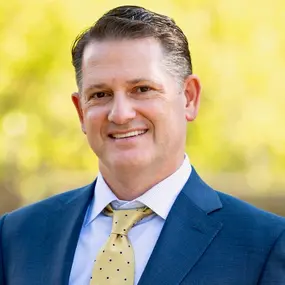
Chairman and CEO
Dan Nash is one of the most experienced and trusted voices in the global SPAC ecosystem. With more than 25 years spanning investment banking, capital markets, M&A, and C-suite leadership, he is widely regarded as a credible practitioner who understands not only how SPACs work, but when they work and
when they do not.
Nash is the Co-Founder and former Head of Investment Banking at Cohen & Company Capital Markets (CCM), where he built the investment banking franchise from the ground up and led a SPAC and capital markets practice that advised on roughly 113 transactions, including 55 business combinations and 9 of the 15 top-performing de-SPACs in recent years. He previously served as Global Head of Internet Investment Banking at Wells Fargo Securities, where his work included the Carvana IPO, and as a Director of Internet Investment Banking at Bank of America,
where he was an active or lead bookrunner on the LinkedIn, Facebook, ACTIVE Network, and Zynga IPOs. That combination of marquee IPO execution and a leading SPAC advisory franchise gives Nash a depth of relationships, market credibility, and track record that sets his advice apart.
Most recently, Nash has focused on building a selective, relationship-driven SPAC platform as Chairman and CEO of Silicon Valley Acquisition Corp. (Nasdaq: SVAQ). His strategy centers on aggregating deal flow through a trusted network of high-quality partners and advisors — each with distinct pipelines — channeled through a single, repeatable platform built on long-term relationships rather than one-off transactions. H… Read More